
Growing guide · Vegetable
How to Grow Sweet Corn
Days to maturity75 days
Spacing8 in
SeasonWarm-season
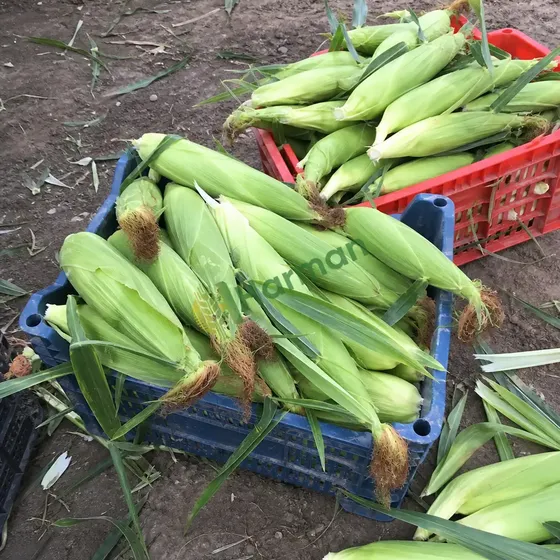
Sweet corn picked minutes before dinner is one of summer's great luxuries. It takes space and feeding, but nothing store-bought compares.
When and how to plant
Corn is frost-tender and needs warm soil to germinate, so sow it directly after the last frost, following the dates above. Plant it in blocks of several short rows rather than one long row so it pollinates well.
Care
Give corn full sun, rich soil, and steady water, especially as the ears fill. It is a hungry crop that appreciates fertile ground.
Common problems
Corn earworms and raccoons are the usual raiders. Timely harvest and a little protection around ripening ears help most.
Harvest
The ears are ready when the silks brown and a punctured kernel spurts milky juice. Pick and cook the same day for the sweetest flavor.
Popular Sweet Corn varieties to grow
Choose sweet corn by maturity date, kernel type, and how much isolation you can manage between varieties. For home gardens, many growers balance early corn for reliability with a main-season variety for flavor and larger ears.
| Variety | Type | Days | Notes | Best for |
|---|---|---|---|---|
| Silver Queen | white sweet corn | 92 | A famous white sweet corn known for large ears and excellent eating quality. It needs a reasonably long season to reach full performance. | fresh eating, classic corn flavor |
| Golden Bantam | yellow heirloom sweet corn | 80 to 85 | A historic heirloom with smaller ears and old-fashioned sweet corn flavor. Plants are hardy and well suited to traditional garden plantings. | heirloom growing, fresh eating |
| Peaches and Cream | bicolor sweet corn | 83 | A popular bicolor variety with tender kernels and broad appeal in home gardens. It balances sweetness and classic corn texture. | fresh eating |
| Honey Select | yellow, triple-sweet hybrid | 80 | An All-America Selections winner with very sweet yellow kernels and strong eating quality. It combines high sugar with good tenderness. | fresh eating, freezing |
| Bodacious | yellow hybrid sweet corn | 75 to 80 | A widely grown sweet corn with good ear size and rich, sweet flavor. It is a dependable main-season hybrid for many regions. | fresh eating, home gardens |
| Early Sunglow | yellow early sweet corn | 63 | An early variety that gives gardeners a fast crop when summer is short. Ears are smaller than full-season types but mature quickly. | short seasons, early harvests |
| Silver King | white hybrid sweet corn | 82 | Produces large, uniform white ears with strong fresh-eating quality. It is often chosen by gardeners who want a white corn similar in style to Silver Queen but a bit earlier. | fresh eating, white corn lovers |
| Ambrosia | bicolor sugary enhanced | 75 | A highly regarded bicolor with sweet tender kernels and good ear quality. It is a standard recommendation for home-garden flavor. | fresh eating, freezing |
Variety notes are general guidance for US home gardens; local performance varies by climate and season. Availability differs by seed supplier.
Growing Sweet Corn in containers
Sweet corn is poorly suited to ordinary containers because it needs deep root space and several plants for wind pollination. If attempted, use a large container at least 18 inches deep and about 15 gallons per plant, grouping multiple plants in a block rather than a single row. Use fertile, well-drained mix, keep it consistently moist and well fed, and choose short-season dwarf corn if available.
Watering & feeding Sweet Corn
Sweet corn typically needs about 1 to 1.5 inches of water weekly, with the higher end often needed in hot weather and on sandy soil. It is a thirsty crop, particularly during tasseling, silking, and ear fill. Water deeply and evenly at the base, keeping the soil consistently moist but not waterlogged. Mulch conserves moisture, and curled or gray-green leaves during morning hours suggest drought stress, while yellowing with constantly saturated soil can indicate overwatering.
Corn is a heavy feeder with a strong need for nitrogen, plus adequate phosphorus and potassium in properly prepared soil. Incorporate compost or other organic matter before planting, and use a soil test to guide nutrient additions. Apply needed nutrients before planting, then side-dress nitrogen when plants are established and again around knee-high growth if soil fertility is low or moderate. Avoid applying fertilizer directly against stems, and do not rely on late feeding to correct severe drought stress during ear fill. Use drip irrigation or a soaker hose so water reaches the root zone efficiently. Keep corn well watered from tassel emergence until ears are nearly mature.
Saving Sweet Corn seeds
Save seed only from open-pollinated sweet corn, since F1 hybrids do not come true and corn is wind-pollinated, so nearby corn can easily contaminate it. Let ears dry fully on the stalk until kernels are hard and dented or glassy, then pick, husk, and finish drying the ears under cover with good airflow. Rub dry kernels from the cob and store only when they are hard and fully dry in a cool, dark, dry place. Sweet corn seed generally keeps about 2 to 3 years.
Sweet Corn companion plants
Sweet corn pairs well with pole beans, winter squash, pumpkins, and cucumbers. Pole beans can climb sturdy corn stalks, beans contribute nitrogen, and sprawling squash or pumpkin can shade soil beneath the corn. Cucumbers can use a nearby trellis rather than compete in the corn row. Avoid planting corn next to tomatoes when possible because both can host the corn earworm, also called the tomato fruitworm, which can increase pest pressure.
When to plant Sweet Corn near you
Get the exact start-indoors, transplant, and fall planting dates for Sweet Corn at your location.
Frequently asked questions about Sweet Corn
When do I plant sweet corn?
Plant sweet corn after the last frost, once the soil is at least about 60 F. Corn needs warm soil for reliable germination.
How long does sweet corn take to grow?
Most sweet corn matures in about 60 to 100 days, depending on the variety. Early varieties are faster, but main-season types often have better flavor and yield.
How much sun does sweet corn need?
Sweet corn needs full sun, ideally 8 hours or more. It also does best in a spot protected from strong wind.
How should sweet corn be spaced in the garden?
Plant corn in short blocks rather than one long row for better pollination. Space plants about 8 to 12 inches apart, with rows 2 to 3 feet apart.
Can sweet corn be grown in containers?
It is usually not ideal for containers because corn is tall, heavy-feeding, and wind-pollinated. If you try it, use large containers and plant several together for pollination.
How do I know when sweet corn is ready to pick?
Harvest when the silks have browned and dried, and the ears feel full. A kernel should release a milky juice when punctured, not clear liquid.
General guidance for US home gardens. Reference figures are typical values; your exact timing depends on your local frost dates and variety. Page updated Sep 18, 2026.