
Celery Nutrition & Uses
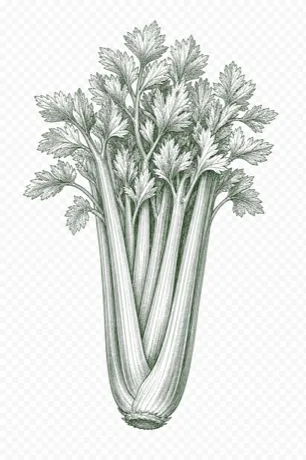
Celery is a crisp, aromatic stalk vegetable used raw for crunch and cooked as a flavor base in many US recipes. It is common in salads, soups, stuffing, stocks, and snack platters.
Nutritional profile
According to USDA FoodData Central, celery is very high in water and low in calories, with small amounts of carbohydrate and fiber. It provides vitamin K, potassium, folate, and modest amounts of vitamin C.
In the kitchen
Celery can be eaten raw, sauteed, braised, or simmered into soups and stocks. It is a standard ingredient in mirepoix, chicken salad, tuna salad, stuffing, and creamy vegetable soups.
Choosing & preparing
Choose celery with firm, tightly packed stalks and fresh-looking leaves. Avoid bunches that are limp, rubbery, split, or browned at the edges.
Flavor pairings
Celery pairs well with peanut butter, cream cheese, blue cheese, parsley, dill, onions, carrots, chicken, tuna, apples, walnuts, and stock-based dishes. It also works well with lemon and herbs in salads.
Tips
Store celery well wrapped to help it stay crisp. The leaves are edible and flavorful, and they can be used in soups, stocks, and herb salads.
General food-composition information based on USDA FoodData Central. This is not medical or dietary advice; for personal guidance, consult a registered dietitian or your doctor. Page updated Sep 18, 2026.