
Celery Pests & Diseases
Celery is a long-season umbellifer (carrot and parsley family) that suffers most from foliar fungal leaf spots in cool, wet weather and from leaf-feeding caterpillars and aphids. Steady moisture, good airflow, and clean seed prevent the large majority of its problems in a home garden.
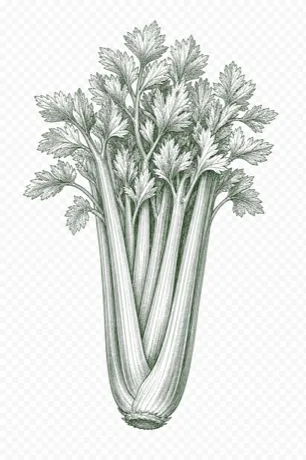
Common Celery pests
Aphids, especially the green peach aphid, cluster on leaf undersides and in the leaf crown, causing curling and sticky honeydew and spreading viruses such as celery mosaic. The celeryworm or parsleyworm (larva of the black swallowtail) is a smooth green caterpillar with black bands and yellow or orange dots that chews foliage, while the celery leaftier (Udea rubigalis) webs leaves together and feeds inside the folds. Carrot rust fly (Chamaepsila rosae) larvae tunnel into roots and the base of stalks, and carrot weevil larvae do similar damage to the crown. Watch also for tarnished plant bug, armyworms, cabbage loopers, cutworms on transplants, leafminers, and slugs, which rasp holes in the outer stalks and leaves.
Common diseases
The two most damaging diseases are early blight or Cercospora leaf spot (Cercospora apii), showing yellowish spots that turn gray to brown, and late blight or Septoria leaf spot (Septoria apiicola), which makes small circular spots dotted with tiny dark fruiting bodies and is often carried on seed. Pink rot (Sclerotinia sclerotiorum) appears as a water-soaked soft rot at the base with white cottony mold and hard black resting bodies. Bacterial leaf spot (Pseudomonas syringae) forms rusty, angular, greasy-looking spots, and Fusarium yellows (Fusarium oxysporum f. sp. apii) causes stunting, yellowing, and brown streaks in the stalk. Aster yellows, a phytoplasma spread by leafhoppers, twists growth and yellows the plant, and the disorders blackheart (from uneven calcium and water) and cracked stem (from low boron) look like disease but are nutritional.
Prevention
Rotate celery so it does not follow carrots, parsley, dill, or other umbellifers for two to three years, and give plants wide spacing so leaves dry quickly after rain or dew. Start with certified disease-free or hot-water-treated seed to avoid seedborne Septoria, and choose resistant or tolerant varieties where offered. Water at the soil line rather than overhead, keep moisture even to prevent blackheart and cracked stem, and clean up crop debris at the end of the season. Avoid working among wet plants, since that spreads fungal and bacterial spores.
Organic control
Hand-pick celeryworms and leaftiers, or apply Bacillus thuringiensis subspecies kurstaki (Bt) while caterpillars are small, following the product label. Knock aphids off with a stream of water and treat persistent colonies with insecticidal soap or neem oil, and float lightweight row covers over young plants to exclude carrot rust fly, plant bugs, and egg-laying moths. Encourage lady beetles, lacewings, and parasitic wasps by keeping some flowering plants nearby, and set out beer or bait traps and copper barriers for slugs. For leaf spots, remove infected leaves early and use a copper-based fungicide as a preventive during prolonged cool, wet spells, always reading and following the label.
Scouting & monitoring
Check leaf undersides and the plant crown weekly for aphids, honeydew, and ants, and look for webbed or chewed leaves that signal leaftiers or celeryworms. After any stretch of cool, rainy weather, inspect outer leaves for spotting so you can pull affected foliage before leaf spot spreads. Scout the base of stalks for soft, water-soaked rot, and watch for yellowing, twisted growth, or leafhoppers that may point to aster yellows. Early-season transplant checks for cutworms and slugs help you catch damage before it sets plants back.
Tips
Keep the foliage dry by watering at the base and spacing plants for airflow, since most celery diseases need wet leaves to take hold. Begin with clean seed and provide steady, even moisture to sidestep both leaf spot and the nutritional disorders blackheart and cracked stem.
General home-garden IPM guidance, focused on prevention and least-toxic control. Always read and follow the product label for any pesticide, including organic products. Page updated Sep 19, 2026.