
The Cost of Growing Cabbage
Cabbage can be a useful crop for small farms because it has broad demand, decent field holding ability, and multiple market forms. It is often sold fresh, as storage cabbage, or into processing and fermentation niches. Economics are usually strongest when growers combine good size uniformity with market timing and low field losses.
Startup costs
Startup costs typically include seed or transplants, bed preparation, fertility, irrigation, and insect exclusion tools where used. Mulch or cultivation tools may be needed for early weed control, and transplants often require greenhouse materials. Harvest bins, knives, and storage space can add to setup costs if the crop is sold over time. Larger headed types also require enough room in the field plan to size properly.
Ongoing costs
Recurring costs include transplanting or seeding labor, irrigation, fertility, weed management, harvest, trimming, and storage handling. Insect and weather damage can increase labor by forcing more sorting and culling. Storage or repeated harvest passes can add recurring costs if the crop is marketed across a long window.
Yield & how it sells
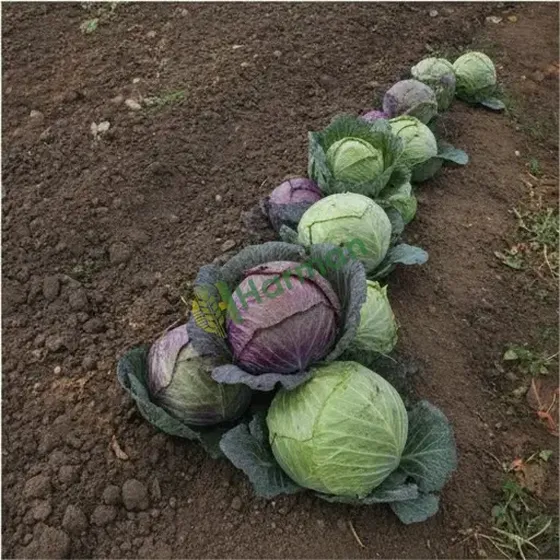
Cabbage can yield a large amount of product per area by weight, making it useful for both fresh sales and bulk movement. It is commonly sold by the head, by the pound, or in larger bins to local retailers or processors. Smaller heads may suit CSA and retail customers better, while larger heads can work for processing or value buyers.
What makes it profitable
Cabbage is often a steady moderate return crop rather than a premium one, but it helps stabilize farm sales because demand is broad and perishability is lower than for many greens. Profitability improves when heads are uniform, clean, and sized for the target outlet. Direct markets can support better margins than bulk sales, especially for early cabbage, specialty savoy types, or storage cabbage sold later. The crop is less attractive when pest damage and trimming losses become excessive.
Financial risks
Main financial risks include insect injury, split heads, rot, and market oversupply during peak harvest periods. Heat and irregular moisture can reduce quality or cause heads to crack. Poor storage conditions can also turn a sound crop into losses after harvest.
Tips to improve returns
Choose head size and maturity timing to fit your sales channel, since too large is often as hard to sell as too small. Keep a close eye on trim loss because it can quietly erode margins. Use your local Cooperative Extension and Small Business Development Center for enterprise budgets and storage assumptions.
General planning information, not financial or investment advice, and not a guarantee of profit. For real budgets, work with your Cooperative Extension office and local Small Business Development Center. Page updated Sep 18, 2026.