
Growing guide · Vegetable
How to Grow Cabbage
Days to maturity70 days
Spacing18 in
SeasonCool-season
Start indoors6 wk pre-frost
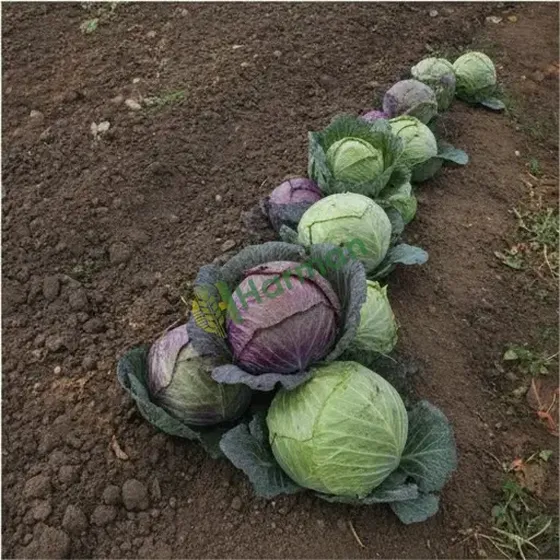
Cabbage forms a solid, storable head and comes in green, red, and crinkled savoy types. It is a dependable cool-season crop that stands up to cold.
When and how to plant
A hardy brassica, cabbage is set out before the last frost, as the dates above show, and makes a reliable fall crop too. Transplants get it off to a strong start.
Care
Full sun, fertile soil, and steady water give firm, heavy heads. Consistent moisture also helps prevent the heads from splitting.
Common problems
Cabbage worms, loopers, and aphids are the usual pests. A floating cover from the start keeps the moths from laying eggs.
Harvest
Cut the head when it feels firm and solid to a squeeze. Harvest before heavy rain after a dry spell, which can cause splitting.
Popular Cabbage varieties to grow
Pick cabbage varieties by intended use, early versus storage season, and head size. Home gardeners often want a mix of fast fresh-eating types and denser varieties that hold well for kraut or winter storage.
| Variety | Type | Days | Notes | Best for |
|---|---|---|---|---|
| Early Jersey Wakefield | heirloom, pointed | 63-75 | A famous early cabbage with compact, cone-shaped heads and sweet, tender texture. It matures quickly and fits well into spring gardens. | early harvests, fresh eating, small spaces |
| Golden Acre | heirloom, round | 65-75 | Golden Acre is a classic small green cabbage with solid, round heads. It is dependable, fairly quick, and easy to fit into home plots. | spring gardens, fresh slaw |
| Copenhagen Market | heirloom, round | 70-80 | This long-grown variety forms dense, medium-sized heads with good flavor and strong garden reliability. It is widely adapted and still popular with home growers. | all-purpose kitchen use |
| Stonehead | hybrid, dense head | 67-75 | Stonehead is a well-known hybrid with firm, medium heads that resist splitting better than many open-pollinated types. It is a favorite for consistent quality. | reliable fresh use, succession planting |
| Savoy Express | savoy, hybrid | 55-65 | An early savoy cabbage with crinkled leaves and tender texture. It brings the sweeter, softer character of savoy types in a relatively quick crop. | fresh cooking, early savoy harvests |
| January King | savoy, heirloom | - | A traditional winter cabbage with handsome blue-green and purple tones and semi-savoyed leaves. It is valued for cold hardiness and strong garden character. | overwintering, cold-climate gardens |
Variety notes are general guidance for US home gardens; local performance varies by climate and season. Availability differs by seed supplier.
Growing Cabbage in containers
Cabbage grows well in containers when each plant has sufficient space. Use one plant in a 5-gallon pot at least 12 inches deep, with drainage holes and fertile, moisture-retentive potting mix. Water consistently and feed every few weeks, and select compact early or small-heading cabbage varieties for pots.
Watering & feeding Cabbage
Provide roughly 1 to 1.5 inches of water per week, increasing in hot, dry conditions. Cabbage is thirsty during rapid leaf and head growth. Water deeply at the base and keep soil consistently moist, especially as heads begin to firm, while allowing drainage between waterings. Mulch reduces evaporation, containers need more frequent checks, and drought causes wilting or slow growth while excess water can cause yellow leaves and root problems.
Cabbage is a heavy feeder that benefits from compost-rich soil and balanced nutrition with reliable nitrogen. Phosphorus and potassium help establish roots and support head formation, and a soil test is the best guide for amendments. Apply compost and a balanced vegetable fertilizer before planting, then side-dress with nitrogen several weeks after transplanting and once more as heads start forming if plants need it. Do not push nitrogen late, since lush growth can contribute to delayed maturity or splitting. Keep moisture most even as heads approach harvest size, then harvest promptly to reduce splitting. Water early in the day so foliage dries quickly.
Saving Cabbage seeds
Save seed from open-pollinated or heirloom cabbage, since F1 hybrids do not come true, and isolate it from other flowering brassicas. Cabbage is biennial, so select firm, healthy heads, overwinter plants in mild climates or store and replant them, and let second-year stalks make dry, tan pods. Harvest pods before they split, thresh out the seed, dry it completely indoors, and store it cool and dry for about 4 to 5 years.
Cabbage companion plants
Good companions for cabbage include dill, cilantro, thyme, and calendula. Flowering herbs and calendula provide nectar and habitat for beneficial insects, and a diverse planting is more useful than relying on any one claimed pest-repellent plant. Avoid planting cabbage in a tight grouping with broccoli, cauliflower, kale, or radishes, because these brassicas share cabbage worms, flea beetles, aphids, and clubroot.
When to plant Cabbage near you
Get the exact start-indoors, transplant, and fall planting dates for Cabbage at your location.
Frequently asked questions about Cabbage
When should I plant cabbage in the US?
Cabbage grows best as a cool-season crop. In most US gardens, plant it in early spring for a late spring or early summer harvest, or set out transplants in late summer for a fall crop.
How long does cabbage take to grow?
Most cabbage varieties take about 70 to 100 days from transplanting, depending on the type and weather. Small early varieties finish faster than large storage types.
How much sun does cabbage need?
Cabbage grows best in full sun, about 6 to 8 hours daily. In warm regions, a little afternoon shade can help reduce stress.
How far apart should I space cabbage plants?
Space most cabbage plants about 12 to 24 inches apart, with wider spacing for large-headed varieties. Good spacing improves head size and airflow.
How do I know when cabbage is ready to harvest?
Harvest when the head feels firm and reaches usable size for the variety. If you wait too long, heads may split, especially after heavy rain.
General guidance for US home gardens. Reference figures are typical values; your exact timing depends on your local frost dates and variety. Page updated Sep 18, 2026.