
How to Start Brussels Sprouts From Seed
Brussels sprouts are cool-season brassicas that are commonly started indoors for sturdy transplants. They develop slowly and need a long season, especially for a fall harvest.
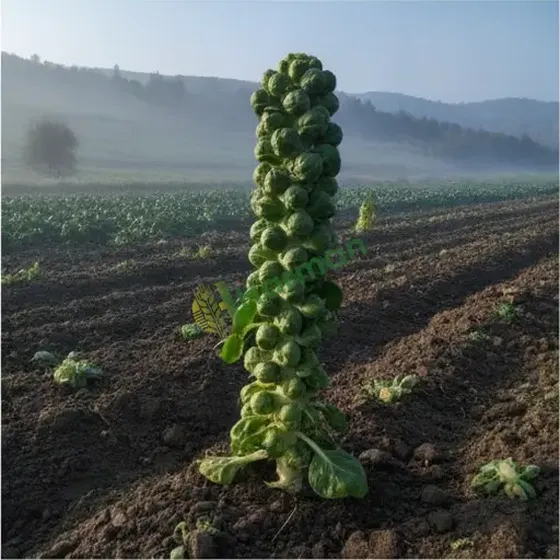
Start indoors or direct sow?
Start indoors and transplant for the most reliable timing, though they can be direct sown in mild, long-season areas. Transplants let gardeners establish plants before summer heat or time them for cool fall maturity.
When to start Brussels Sprouts seeds
For a fall crop, start seeds indoors about 4 to 6 weeks before the last spring frost and transplant near the last frost date or shortly after. In mild climates, direct sow from around the last frost date into early summer, allowing enough time before hard freezes.
How to sow the seeds
Sow seeds 1/4 inch deep in sterile seed-starting mix in cell packs or 2-inch pots. Keep containers in a warm spot until sprouting, then move seedlings under bright lights with good airflow.
Germination
Seeds usually germinate in about 5 to 10 days. Soil temperatures around 65 to 75 F encourage quick, even emergence, and the mix should stay evenly moist rather than saturated.
Seedling care
Provide 14 to 16 hours of bright grow light daily and water when the surface of the mix begins to dry. Thin to one seedling per cell, use a small fan for airflow, and avoid overwatering to reduce damping off.
Transplanting & hardening off
Harden seedlings off for 7 to 10 days before planting them in full sun. Move them outside when they have several true leaves and are sturdy enough to handle cool weather, planting at the same depth as in their containers.
Tips
Choose a variety suited to your local season length, since sprouts form best in cool weather. Keep seedlings growing steadily, because stressed young plants may make weaker, less uniform crops.
General seed-starting guidance for US home gardens; timing depends on your local frost dates and variety. Page updated Sep 18, 2026.