
Turnips Nutrition & Uses
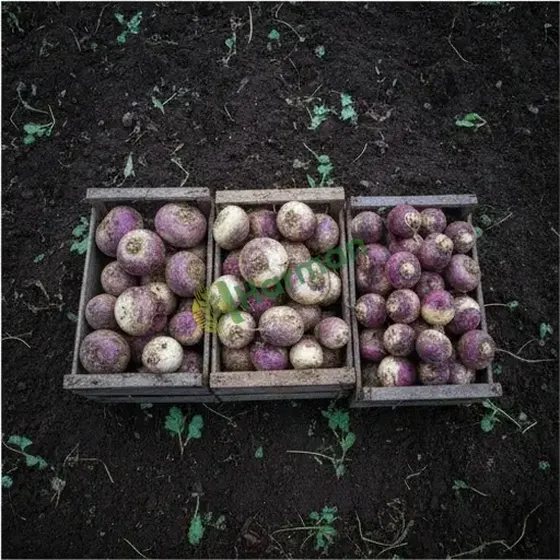
Turnips are root vegetables with a mildly sweet, slightly peppery flavor, and their greens are also edible. In US kitchens the roots are roasted, mashed, or added to soups and stews, while the greens are cooked like other leafy vegetables.
Nutritional profile
According to USDA FoodData Central, turnip roots are high in water and relatively low in calories, with carbohydrate and some fiber. They provide vitamin C and potassium, and turnip greens contain vitamin K, vitamin A compounds, and folate.
In the kitchen
Turnip roots can be roasted, boiled and mashed, glazed, or simmered in soups and stews. The greens can be sauteed or braised, and the roots also work well in mixed root vegetable roasts and pickles.
Choosing & preparing
Choose roots that feel firm and heavy, with smooth skin and no major cracks. Smaller to medium turnips are usually more tender, and avoid soft, spongy, or shriveled ones.
Flavor pairings
Turnips pair well with butter, thyme, rosemary, garlic, mustard, honey, potatoes, carrots, onions, bacon, cream, and Parmesan. The greens pair well with vinegar, chile flakes, and smoked meats.
Tips
Peel larger turnips if the skin seems thick or waxy. Save the greens if they are fresh, since they cook well and reduce waste.
General food-composition information based on USDA FoodData Central. This is not medical or dietary advice; for personal guidance, consult a registered dietitian or your doctor. Page updated Sep 18, 2026.