
Turnips Pests & Diseases
Turnips are a fast, cool-season brassica, and their biggest headaches come from the same flea beetles, aphids, caterpillars, and root maggots that trouble the whole cabbage family. Soil-borne clubroot and foliar diseases like downy mildew and Alternaria leaf spot are the main disease risks, and most are far easier to prevent than to cure.
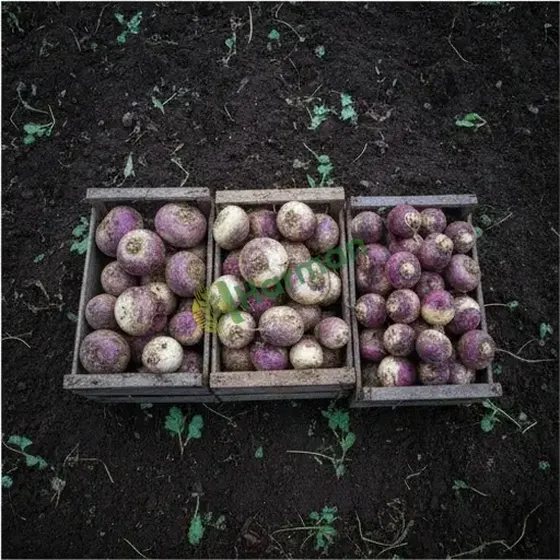
Common Turnips pests
Crucifer and striped flea beetles are the classic early pest, chewing tiny round shot-holes in seedling leaves that can stunt a young stand overnight. Cabbage aphids and turnip aphids form gray-green waxy clusters on leaf undersides and growing tips, causing curling, yellowing, and sticky honeydew. Caterpillars including the imported cabbageworm (velvety green), cabbage looper (inchworm crawl), and diamondback moth larvae chew ragged holes in the tops. Cabbage root maggots are small white larvae that tunnel into the roots, leaving brown scars and slimy channels that ruin the eating quality, while harlequin bugs suck sap and leave white or yellow stippled blotches. Deer, rabbits, groundhogs, and voles will also graze the greens and gnaw the roots.
Common diseases
Clubroot, a soil-borne organism, causes swollen, distorted, club-like roots along with wilting and stunting on hot afternoons even when soil is moist. Downy mildew shows as yellow angular patches on the upper leaf with grayish fuzzy growth on the underside in cool, wet weather. Alternaria leaf spot (black spot) produces dark brown spots with concentric target-like rings, and white rust raises glossy white blister-like pustules on leaf undersides. Black rot, a bacterial disease, creates yellow V-shaped lesions running in from the leaf margin with blackened veins, and turnip mosaic virus mottles and puckers the foliage with light and dark green patterns.
Prevention
Rotate turnips and all brassicas so they do not return to the same bed for three to four years, which starves clubroot, root maggots, and leaf-spot pathogens. Space and thin plants for good airflow, water at the soil line rather than overhead, and water in the morning so leaves dry quickly to discourage downy mildew and leaf spots. Keep clubroot at bay by liming acidic soil toward a near-neutral pH and improving drainage, and choose disease-resistant or tolerant varieties when available. Clean up crop debris and weedy mustards after harvest, since they harbor aphids, viruses, and overwintering spores, and time plantings so tender seedlings avoid the peak of flea beetle and root maggot flights.
Organic control
Cover seedbeds with floating row covers from the day of sowing to block flea beetles, cabbage root maggot flies, and egg-laying moths, keeping the edges sealed and removing covers only if needed for weeding. Handpick caterpillars and harlequin bugs, and knock aphid colonies off with a strong spray of water or treat persistent ones with insecticidal soap or neem, following the product label. Apply Bt (Bacillus thuringiensis kurstaki) for young caterpillars when you first see chewing, reapplying per the label since it works best on small larvae. Encourage lady beetles, lacewings, and parasitic wasps by keeping some flowers nearby, and use yellow sticky cards to catch adult flea beetles and root maggot flies. For foliar diseases, remove affected leaves early and, if pressure is high, a copper-based product used according to the label can help slow downy mildew and leaf spots.
Scouting & monitoring
Scout seedlings every day or two from emergence, since flea beetle shot-holing and root maggot injury do the most damage to young plants. Check leaf undersides and growing tips weekly for aphid clusters and for caterpillar eggs and frass, and watch for the first yellow angular patches or target-ringed spots that signal downy mildew or Alternaria. In warm, humid stretches inspect more often, and pull and examine a few roots late in the season for the swellings that reveal clubroot before it spreads. Note any deer or rabbit browsing so you can add fencing before the crop is lost.
Tips
Row covers put on at sowing are the single most effective home-garden tool, since they stop flea beetles, root maggots, and caterpillar moths before damage starts. Lean on rotation, good drainage, and near-neutral soil pH to keep clubroot out, because once it is in a bed it can persist for many years.
General home-garden IPM guidance, focused on prevention and least-toxic control. Always read and follow the product label for any pesticide, including organic products. Page updated Sep 18, 2026.