
Okra Crop Rotation
Rotating okra keeps soilborne pests and diseases from concentrating in one bed and helps you replace the nutrients this hungry warm-season crop pulls from the soil. Moving it around the garden each year is one of the simplest ways to keep plants vigorous and productive.
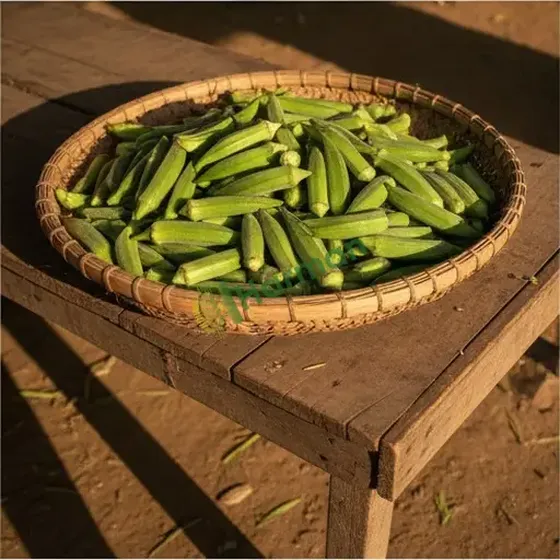
Plant family
Okra belongs to the mallow family (Malvaceae). Its close relatives are mostly ornamentals and field crops rather than vegetables, including cotton, hibiscus, hollyhock, and rose of Sharon, which can share some of okra's pests and diseases.
Why rotate okra
Growing okra or its mallow relatives in the same spot year after year lets root-knot nematodes, Fusarium wilt, and Verticillium wilt build up in the soil, along with fungal leaf and pod problems. Okra is also a heavy feeder, so repeated planting draws down nitrogen and other nutrients. Because it shares root-knot nematodes and wilt diseases with crops like tomatoes, peppers, eggplant, and cucumbers, those beds can pass problems along too.
What to plant after
Okra does well following legumes such as bush beans, peas, cowpeas, or a clover or vetch cover crop, because legumes fix nitrogen and leave the soil richer for this heavy feeder. It also fits nicely after leafy greens or a cover crop that has added organic matter, giving okra the fertile, well-drained ground it prefers.
What to avoid
Avoid planting okra right before or after other mallow-family plants like cotton, hibiscus, or hollyhock, since they share the same pests and diseases. It is also wise to keep okra out of beds that just grew tomatoes, peppers, eggplant, potatoes, or cucumbers, because those crops are prone to the same root-knot nematodes and wilt diseases and can leave a heavier load in the soil.
Example rotation
A simple four-year plan for one bed could run: Year 1 legumes such as beans or peas, Year 2 okra, Year 3 leafy greens or a root crop like carrots, and Year 4 a nitrogen-fixing cover crop or another round of legumes. Then the cycle repeats, so okra only returns to that bed every four years.
Tips
Keep a simple garden map or notebook each season so you always know where okra grew and can wait at least two to three years before it returns to the same bed. Grouping crops by family and slipping a legume or cover crop into the rotation ahead of okra makes it easy to feed the soil while breaking pest and disease cycles.
General guidance for US home gardens. Adapt to your own crops, soil, and space; your Cooperative Extension office can help with a plan for your area. Page updated Sep 18, 2026.