
Okra Pests & Diseases
Okra is a warm-season mallow-family crop that is fairly rugged, but in hot, humid gardens it draws sap-feeding insects and soil-borne fungi. The most common headaches are aphids, stink bugs, and corn earworms on the plants, plus Fusarium wilt, root-knot nematodes, and leaf spots on the foliage.
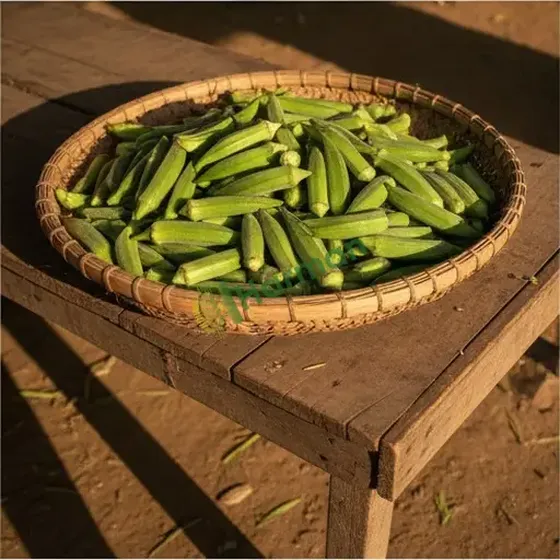
Common Okra pests
Aphids, especially the cotton or melon aphid, cluster on shoot tips and leaf undersides, leaving sticky honeydew and black sooty mold and causing curled, distorted new growth. Corn earworms (also called cotton bollworm) and stink bugs attack the pods; earworm caterpillars chew into the pods, while stink bugs and leaf-footed bugs pierce them and leave warty, dimpled, or twisted pods. Flea beetles and Japanese beetles chew small shot-holes or skeletonize the leaves, whiteflies and spider mites feed on the undersides (mites cause fine pale stippling and webbing in hot, dry spells), and root-knot nematodes below ground produce galled roots, stunting, and midday wilting.
Common diseases
Fusarium and Verticillium wilt are soil-borne fungi that cause yellowing lower leaves, one-sided wilting, and brown streaking inside the stem, often killing plants before harvest. Southern blight (Sclerotium or Athelia rolfsii) shows up in warm, wet Southern gardens as a white fungal mat with small tan pellets at the soil line, followed by sudden wilting. Foliar troubles include Cercospora leaf spot, which produces angular to round spots that make leaves drop, powdery mildew, which coats leaves with white powdery patches later in the season, and damping-off of seedlings in cold, wet soil; root-knot nematodes also weaken plants and make the wilt diseases worse.
Prevention
Rotate okra out of beds that grew okra, cotton, or other mallows for two to three years, and avoid following tomatoes or peppers where wilts and nematodes are already a problem. Give plants full sun and wide spacing for good airflow, sow into warm soil to avoid damping-off, and water at the base with drip lines or soaker hoses to keep the foliage dry. Choose wilt-tolerant and nematode-tolerant varieties where you can find them, clear out and remove crop debris at the end of the season, and build soil with organic matter and cover crops to help suppress nematodes.
Organic control
Knock aphids, whiteflies, and mites off with a strong spray of water and encourage lady beetles, lacewings, and parasitic wasps before reaching for insecticidal soap or neem oil, applying either in the evening and always reading and following the product label. Hand-pick corn earworms, stink bugs, and beetles in the early morning, and use lightweight floating row covers on young plants, removing them once flowering starts so pollinators can reach the blooms. For small caterpillars in the pods a Bt product labeled for the pest can help while larvae are young, and for foliar fungal spots or powdery mildew an organic sulfur or copper product used per label directions is an option, though improving airflow usually matters more.
Scouting & monitoring
Scout weekly once plants are up, checking shoot tips and leaf undersides for aphids, whiteflies, and the fine stippling that signals spider mites. As flowering and podding begin, inspect developing pods and blooms for corn earworm entry holes, stink bug dimpling, and chewing damage, and watch the lower leaves for the yellowing, wilting, or spotting that flags wilt diseases or Cercospora. In the South, check the soil line for the white mat of southern blight during warm, wet stretches, and pull a few plants at season's end to look for root-knot galls so you can plan next year's rotation.
Tips
Prevention beats rescue with okra, so lead with rotation, wide spacing, warm-soil planting, and watering at the base, and save any sprays for confirmed problems. Harvest pods young and often, since it keeps plants productive and gives you a regular, close-up chance to catch pests and disease early.
General home-garden IPM guidance, focused on prevention and least-toxic control. Always read and follow the product label for any pesticide, including organic products. Page updated Sep 18, 2026.