
Kale Pests & Diseases
Kale is a hardy, cool-season brassica, but it draws the same cluster of pests and diseases that trouble the whole cabbage family. The most common problems are leaf-chewing caterpillars, aphids, and flea beetles, along with fungal and bacterial diseases such as downy mildew and black rot that spread quickly in cool, wet weather.
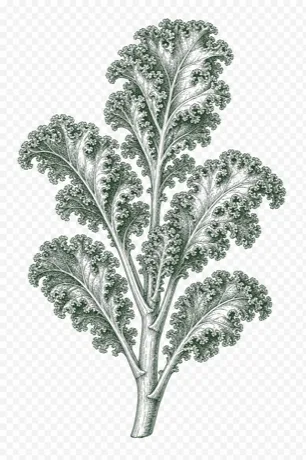
Common Kale pests
The classic kale caterpillars are the imported cabbageworm (velvety green with a faint yellow stripe, from a white butterfly), the cabbage looper (a green inchworm that arches as it crawls), and the tiny diamondback moth larva. All three chew ragged holes in leaves and leave dark, crumbly droppings. Cabbage aphids form dense gray-green, waxy clusters on new growth and leaf undersides, causing curling and stunting, while flea beetles are tiny black beetles that jump when disturbed and pepper leaves with small round shot holes. Watch also for the harlequin bug, a shield-shaped black-and-orange stink bug that leaves pale stippled blotches, and for cabbage root maggots that tunnel into roots. Deer, rabbits, and groundhogs will also browse kale heavily where they have access.
Common diseases
Black rot, a bacterial disease, is one of the most serious problems and shows up as yellow, V-shaped lesions spreading in from the leaf margins, with darkened veins. Downy mildew produces pale yellow blotches on the upper leaf surface with a fuzzy gray or purple growth underneath, worst in cool, humid conditions. Alternaria leaf spot causes small dark spots that enlarge into brown target-like rings, and white rust forms raised white, blister-like pustules on leaf undersides. Clubroot, a soilborne disease, causes wilting and stunting above ground and swollen, distorted roots below, and it can persist in soil for years.
Prevention
Rotate brassicas so kale does not follow other cabbage-family crops for at least three to four years, which starves soilborne diseases like clubroot and black rot. Give plants full sun and generous spacing so leaves dry quickly, and water at the base in the morning rather than wetting the foliage. Choose disease-resistant varieties when available, start with clean, certified seed, and keep the bed weeded, since related weeds like wild mustard host the same pests and diseases. Remove and destroy crop debris at the end of the season, and keep soil pH near neutral, which helps suppress clubroot.
Organic control
Cover young plants with floating row covers right after transplanting to block cabbageworm butterflies, flea beetles, and root maggot flies, keeping them on until harvest since kale needs no pollination. Scout leaf undersides and hand-pick caterpillars, eggs, and harlequin bugs into soapy water, and knock aphid colonies off with a strong spray of water or treat them with insecticidal soap or neem, following the product label. For persistent caterpillars, Bacillus thuringiensis (Bt) is a selective, low-toxicity option applied to the foliage when larvae are small and actively feeding. Encourage beneficial insects such as lady beetles, lacewings, and parasitic wasps by keeping some flowering plants nearby, and where disease pressure is high a copper-based product used according to its label can help slow bacterial and downy mildew problems.
Scouting & monitoring
Check plants at least once or twice a week, looking closely at leaf undersides and the growing tips where aphids and eggs first appear. Early in the season watch for flea beetle shot holes and cabbage root maggot damage on young transplants, and through the warm months scout for caterpillars, their droppings, and the white cabbage butterflies fluttering over the bed. During cool, damp spells inspect for the yellow blotches and fuzzy undersides of downy mildew and for the V-shaped yellowing of black rot. Catching small infestations and the first disease spots early makes hand-picking and least-toxic sprays far more effective.
Tips
Row covers plus a weekly hand-picking habit prevent most kale pest damage without any spraying. Water at the base in the morning and give plants room to breathe, since dry foliage and good airflow are your strongest defense against the fungal and bacterial diseases of the cabbage family.
General home-garden IPM guidance, focused on prevention and least-toxic control. Always read and follow the product label for any pesticide, including organic products. Page updated Sep 18, 2026.