
Radishes Nutrition & Uses
Radishes are crisp root vegetables with a peppery bite that can range from mild to sharp. In US kitchens they are usually eaten raw in salads and snack plates, but they can also be roasted, sauteed, or pickled.
Nutritional profile
According to USDA FoodData Central, radishes are very high in water and low in calories, with small amounts of carbohydrate and fiber. They provide vitamin C, potassium, and modest amounts of folate.
In the kitchen
Radishes are often sliced raw for salads, slaws, tacos, and buttered toasts, and they also pickle well. Roasting or sauteing softens their bite and makes them a good addition to sheet-pan meals.
Choosing & preparing
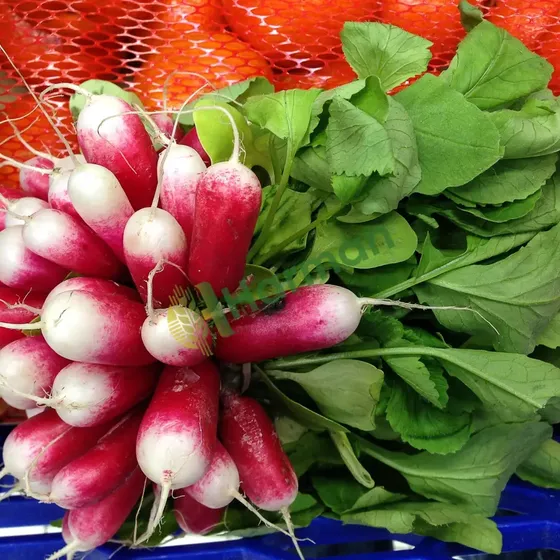
Choose radishes that are firm, smooth, and brightly colored, with fresh-looking tops if attached. Avoid roots that are soft, cracked, shriveled, or spongy.
Flavor pairings
Radishes pair well with butter, salt, lemon, vinegar, dill, chives, parsley, cucumbers, yogurt, sour cream, and mild cheeses. They also fit well with tacos, smoked fish, and grain bowls.
Tips
Separate the greens from the roots before storage so the radishes stay crisper. Radish greens are edible and can be sauteed or blended into pesto.
General food-composition information based on USDA FoodData Central. This is not medical or dietary advice; for personal guidance, consult a registered dietitian or your doctor. Page updated Sep 18, 2026.