
Borage Nutrition & Uses
Borage is used mainly as a fresh herb and garnish, so it is eaten in small amounts rather than as a bulk vegetable. The following describes its general composition as reported by USDA FoodData Central for raw borage.
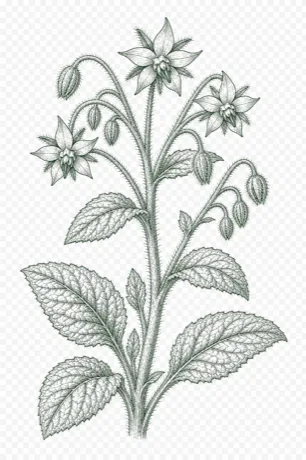
Nutritional profile
According to USDA FoodData Central, raw borage leaves are very high in water, roughly 93 percent, and low in calories at about 21 per 100 grams. They contain a small amount of protein and dietary fiber and provide vitamin C and vitamin A, along with minerals such as potassium, calcium, iron, and magnesium. Because borage is typically used as a seasoning or garnish in small quantities, the amounts contributed to a dish are modest.
In the kitchen
Borage has a mild cucumber flavor that shines when used fresh and raw. Young leaves are chopped into salads, cucumber sandwiches, yogurt dips, and chilled soups, and are a traditional ingredient in German green sauce (Frankfurter Grüne Soße). Older, larger leaves can be lightly cooked like spinach or stirred into soups and fillings, which tames their bristly texture. The blue flowers are used as a garnish on salads, cakes, and cocktails, or frozen into ice cubes.
Choosing & preparing
Choose the youngest, smallest leaves, which are the most tender and least prickly, and avoid large coarse leaves that feel stiff and hairy. Pick flowers that are fully open and vivid blue, passing over any that look wilted or faded. The freshest borage looks perky and smells faintly of cucumber.
Flavor pairings
Borage pairs naturally with cucumber, yogurt, soft cheeses, dill, mint, and chives. It complements cold summer soups, seafood, egg dishes, and lemony dressings, and the flowers add color to fruit salads, lemonade, and iced drinks.
Tips
Use borage fresh whenever possible, since its cucumber flavor fades with cooking and storage. The fine hairs on mature leaves can feel prickly raw, so finely chop older leaves or cook them briefly, and reserve the smallest young leaves for fresh use.
General food-composition information based on USDA FoodData Central. This is not medical or dietary advice; for personal guidance, consult a registered dietitian or your doctor. Page updated Sep 18, 2026.