
How to Store Borage
Borage leaves and flowers are delicate and do not keep long, so they are best gathered close to when you plan to use them. With a little care, though, you can hold fresh cuttings for several days and preserve the harvest for later use.
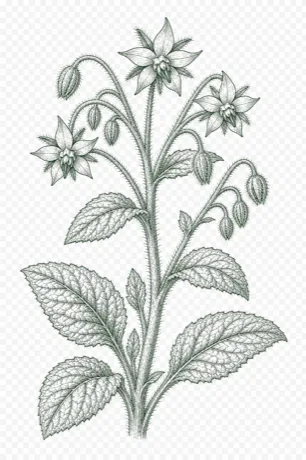
Best storage conditions
Store cut leaves and flowers in the refrigerator at about 34 to 40 degrees F with high humidity. Keep leaves in a loosely closed bag or a container lined with a slightly damp paper towel, and keep the fragile blossoms in a single layer in a small covered container so they are not crushed.
How long it keeps
Fresh borage leaves generally hold 2 to 3 days in the refrigerator before they wilt and turn slimy, while the flowers are even more perishable and are best used within a day or two of picking. For best flavor and texture, use both as soon as possible after harvest.
Storage methods
Refrigeration in a breathable bag or damp-towel-lined container is the simplest short-term method for leaves. Flowers keep best laid flat in a shallow covered dish. Avoid washing until just before use, since excess moisture speeds spoilage.
Freezing & preserving
The flowers freeze beautifully set into ice cubes, and chopped leaves can be frozen in water or as a puree in ice cube trays for later use in soups and drinks. Borage does not dry especially well because it loses much of its fresh cucumber flavor, though leaves can be dried for tea if desired. Borage is a low-acid vegetable, so do not can it using homemade methods; only follow tested USDA or National Center for Home Food Preservation (NCHFP) recipes, and note that low-acid foods require pressure canning rather than a boiling-water bath.
Tips
Handle the flowers gently, as they bruise easily and lose their blue color when crushed. Because the fresh cucumber flavor fades quickly with heat and storage, plan to enjoy most of your borage fresh and freeze only what you cannot use right away.
General home-storage guidance. For home canning and preserving safety, follow USDA and National Center for Home Food Preservation (NCHFP) guidelines. Page updated Sep 18, 2026.