
Basil Nutrition & Uses
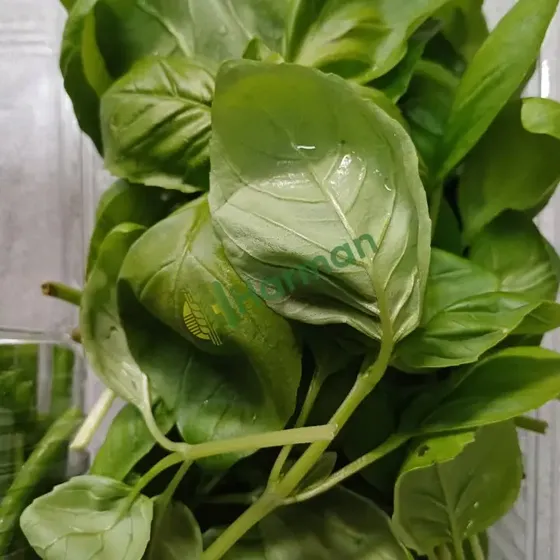
Basil is a fragrant culinary herb with a sweet, peppery aroma that is widely used in US kitchens. It is common in pesto, tomato dishes, salads, sauces, and herb-forward summer cooking.
Nutritional profile
According to USDA FoodData Central, fresh basil contains water, small amounts of carbohydrate and fiber, and vitamins and minerals such as vitamin K, vitamin A compounds, and manganese. Because basil is usually eaten in small amounts, its nutrient contribution per serving is typically modest.
In the kitchen
Basil is used fresh in salads, sandwiches, pasta, pizza, pesto, and tomato sauces, and it can also be blended into dressings and marinades. It is often added near the end of cooking to keep its aroma bright.
Choosing & preparing
Choose basil with vibrant green leaves and firm stems. Avoid bunches with blackened spots, yellowing, wilting, or wet, slimy leaves.
Flavor pairings
Basil pairs especially well with tomatoes, mozzarella, garlic, lemon, olive oil, strawberries, peaches, eggplant, zucchini, chicken, and beans. It also combines well with parsley, oregano, and mint.
Tips
Tear or slice basil just before serving to keep it from darkening. For short storage, keep stems in water at cool room temperature rather than in a very cold refrigerator.
General food-composition information based on USDA FoodData Central. This is not medical or dietary advice; for personal guidance, consult a registered dietitian or your doctor. Page updated Sep 18, 2026.