
Asparagus Nutrition & Uses
Asparagus is a tender spring vegetable with grassy, slightly sweet flavor. In US kitchens, it is commonly roasted, grilled, steamed, sauteed, or folded into pasta, risotto, and egg dishes.
Nutritional profile
According to USDA FoodData Central, raw asparagus is low in calories and high in water, with fiber and small amounts of protein. It contains folate and vitamin K in notable amounts, along with vitamin C, vitamin A, and potassium.
In the kitchen
Asparagus cooks quickly and can be roasted, grilled, steamed, sauteed, or blanched for salads. It is good with eggs, in lemony pasta, wrapped in pastry, or added to stir-fries and spring soups.
Choosing & preparing
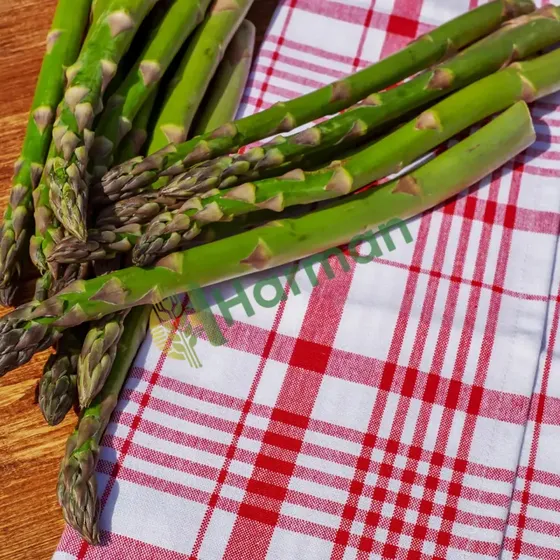
Choose spears that feel firm, with tight tips and cut ends that do not look overly dry. Avoid limp spears, mushy tips, or stalks that look shriveled.
Flavor pairings
Asparagus pairs well with lemon, butter, olive oil, Parmesan, eggs, garlic, tarragon, dill, and prosciutto. It also works with mushrooms, peas, salmon, and creamy sauces.
Tips
Trim or snap off the woody ends before cooking. Thick spears can be peeled near the base for a more even texture.
General food-composition information based on USDA FoodData Central. This is not medical or dietary advice; for personal guidance, consult a registered dietitian or your doctor. Page updated Sep 19, 2026.