
Growing guide · Fruit
How to Grow Blackberries
Days to maturity365 days
Spacing36 in
SeasonCool-season
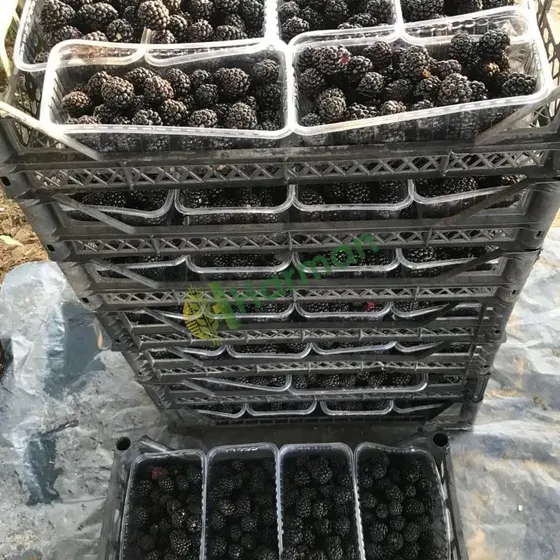
Blackberries are hardy perennial brambles in the genus Rubus, grown across much of the United States for their large, sweet-tart summer berries. Home gardeners like them because a small planting of thornless canes can produce heavily for years with modest effort, and the fresh-picked flavor is far better than what you find in stores. Most types thrive in USDA zones 5 through 9, with cultivars suited to nearly every region.
When and how to plant
Set out dormant bare-root canes or potted plants in early spring once the ground can be worked and hard freezes have passed; in mild-winter areas, fall planting also works well. Choose a site with full sun, at least six to eight hours a day, and well-drained soil with a slightly acidic pH, roughly 5.5 to 6.5, enriched with compost. Space erect and semi-erect types about 3 to 4 feet apart and trailing types 5 to 8 feet apart, with rows 8 to 10 feet apart to leave room for picking and airflow. Plant each cane at the same depth it grew in the nursery, water it in well, and avoid ground where tomatoes, potatoes, peppers, or eggplant recently grew.
Care
Remember that the roots and crown are perennial but each cane is biennial: first-year primocanes grow, then fruit as floricanes the second year and die back, so cut spent floricanes to the ground right after harvest. Give plants about 1 to 2 inches of water per week, and more during flowering and fruiting, and spread a few inches of organic mulch to hold moisture and hold down weeds. Feed lightly in early spring as new growth begins, and trellis semi-erect and trailing types on a two-wire system while tipping the tops of erect primocanes in summer to encourage sturdy, fruitful side branches. Keep the patch narrow, pull up stray suckers, and thin canes each year so light and air can reach the center.
Common problems
Common pests include spotted wing drosophila, cane borers, Japanese beetles, and aphids, while frequent diseases are anthracnose, cane blight, orange rust, gray mold, and verticillium wilt. Prevent most trouble by starting with certified disease-free plants, spacing for good air circulation, and promptly removing and destroying old fruited canes and any plants showing orange rust. Picking ripe fruit often and keeping the rows weeded and open also reduces mold and insect pressure.
Harvest
Blackberries ripen from early to late summer and are ready when the fruit is fully black, dull rather than shiny, and slips off the plant with a gentle tug. Pick every two to three days in the cool of the morning, handling the soft berries lightly to avoid crushing them. They are highly perishable, so refrigerate promptly and use within a few days, or freeze the extras on a tray before bagging for longer storage.
Popular Blackberries varieties to grow
Blackberry varieties differ by thorniness, cane habit, winter hardiness, and whether they fruit on first-year or second-year canes. For US home gardens, the biggest choice is often erect thornless types for ease, versus older thorny kinds with strong flavor or toughness.
| Variety | Type | Days | Notes | Best for |
|---|---|---|---|---|
| Chester | thornless, semi-erect | - | Chester is a widely grown thornless blackberry known for heavy yields, good disease tolerance, and late-season harvest. Berries are firm and useful fresh or for preserving. | reliable home production, preserving |
| Triple Crown | thornless, semi-erect | - | Triple Crown is famous for large, flavorful berries and strong vigor. It is a favorite for fresh eating where winter conditions are not too severe. | fresh eating, large berries |
| Ouachita | thornless, erect | - | Ouachita produces glossy black berries with good sweetness on upright canes that are easier to manage than trailing types. It is a common modern garden choice. | backyard patches, easy training |
| Natchez | thornless, erect | - | Natchez ripens early and is known for very large elongated berries. It is especially useful for gardeners wanting an early thornless crop. | early harvests, fresh use |
| Prime-Ark Freedom | thornless, primocane-fruiting | - | One of the first widely available thornless primocane-fruiting blackberries, it can produce on first-year canes in suitable climates. Fruit is large and attractive, though performance varies by heat and region. | extended harvests, experimental home plantings |
| Kiowa | thorny, erect | - | Kiowa is known for exceptionally large berries and a long picking season. Canes are thorny, but fruit size keeps it popular with some home growers. | very large berries, classic blackberry patches |
Variety notes are general guidance for US home gardens; local performance varies by climate and season. Availability differs by seed supplier.
Growing Blackberries in containers
Blackberries are suitable for containers if you choose a compact, thornless cultivar and provide support. Plant one cane in a 20 gallon pot at least 18 to 24 inches deep, using well-drained potting mix and a trellis. Keep the mix evenly moist, fertilize in spring with a slow-release balanced fertilizer, and look for erect, dwarf, or patio blackberry varieties.
Watering & feeding Blackberries
Blackberries usually need about 1 to 2 inches of water per week during active growth and fruiting. They are average to moderately thirsty, with the greatest need during flowering and berry development. Soak the soil deeply at the base and allow the surface to dry slightly between waterings, rather than giving daily shallow irrigation. Mulch conserves water and limits weeds; wilted shoot tips, small fruit, and dry soil indicate drought, while standing water and yellowing growth suggest overwatering.
Blackberries are moderate feeders and do best in soil enriched with compost before planting. Nitrogen helps establish canes, while phosphorus and potassium support root growth and fruit production. Feed in early spring as new growth starts, using additional light feeding only if plants are weak or soil testing indicates a need. Avoid late or heavy nitrogen applications, since they can stimulate soft growth and reduce winter hardiness. Use drip irrigation or a soaker hose to limit leaf wetness. Water most carefully from bloom through harvest, then taper off as the season ends.
Saving Blackberries seeds
Blackberries generally do not come true from seed, and named cultivars are best propagated by tip layering, suckers, or cuttings. Mash ripe berries in water, wash away the pulp, recover the hard seeds, and dry them fully before storage. Keep seeds cool, dark, and dry for about 2 to 3 years; they commonly need scarification and cold stratification to germinate.
Blackberries companion plants
Good companions for blackberries include chives or garlic for garden diversity, and yarrow or other compact flowering plants to attract pollinators and beneficial insects. Low-growing clover can be used in adjacent paths where it will not compete with the blackberry crown, adding nitrogen and protecting soil. Avoid nearby raspberries, strawberries, tomatoes, potatoes, peppers, and eggplant when possible, because brambles and these crops can share pests or soilborne diseases, and avoid dense plantings that restrict airflow.
When to plant Blackberries near you
Get the exact start-indoors, transplant, and fall planting dates for Blackberries at your location.
Frequently asked questions about Blackberries
When should I plant Blackberries?
In most of the US, plant Blackberries in early spring once the soil is workable and hard frost has passed. In mild-winter regions like the South and West Coast, late fall planting also works and gives roots time to establish before summer.
How much sun do Blackberries need?
Blackberries produce best in full sun, meaning at least 6 to 8 hours of direct light per day. They tolerate light afternoon shade in hot southern climates, but too much shade reduces flowering and berry size.
How far apart should I space Blackberry plants?
Space erect and semi-erect varieties about 3 to 4 feet apart in rows, and trailing types roughly 5 to 8 feet apart since they spread more. Leave 6 to 8 feet between rows so you have room to walk, prune, and pick.
How long do Blackberries take to grow and produce fruit?
Most Blackberries fruit on second-year canes, so a spring-planted bush usually gives its first real harvest the following summer. Everbearing (primocane) types can produce a smaller crop in late summer of the first year.
Can I grow Blackberries in containers?
Yes, compact or thornless varieties grow well in large containers of at least 5 to 10 gallons with drainage holes and quality potting mix. Container plants dry out faster, so water consistently and give the canes a small trellis or stake for support.
How do I know when Blackberries are ready to harvest?
Ripe Blackberries turn fully deep black and dull rather than shiny, and they detach easily with a gentle tug. Pick every 2 to 3 days during the season, since berries do not continue to ripen much after being picked and can mold quickly.
What are common problems when growing Blackberries?
Common issues include spotted wing drosophila and Japanese beetles, fungal troubles like anthracnose and cane blight in humid areas, and birds eating ripe fruit. Good airflow through pruning, removing old fruited canes, and netting the bushes help prevent most of these problems.
General guidance for US home gardens. Reference figures are typical values; your exact timing depends on your local frost dates and variety. Page updated Sep 18, 2026.