
Peanuts Crop Rotation
Rotating peanuts keeps soilborne fungi and nematodes from building to damaging levels in one bed. Because peanuts fix their own nitrogen, moving them around the garden also lets you place their soil-building benefit where the next crop needs it most.
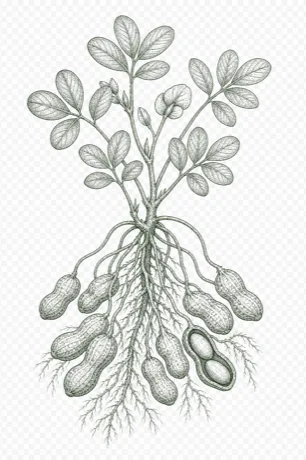
Plant family
Peanuts belong to the legume family (Fabaceae), along with close relatives such as beans, peas, cowpeas, soybeans, lentils, and clover. These crops share many of the same soilborne diseases and pests, so they should be treated as one group when you plan a rotation.
Why rotate peanuts
When peanuts or other legumes grow in the same spot year after year, soilborne problems such as southern blight (Sclerotium rolfsii), white mold, root-knot nematodes, and various leaf spot fungi build up in the soil and plant debris. Peanut pods also develop underground, so heavy nematode or fungal populations directly damage the developing crop. Repeated legume planting can also leave the soil unbalanced, since these crops add nitrogen but draw steadily on phosphorus, potassium, and calcium.
What to plant after
Peanuts do well following grasses and cereals such as sweet corn, sorghum, or a small-grain cover like rye or oats, because these non-legumes do not host peanut diseases and help lower root-knot nematode and soilborne fungus pressure. Following a grassy crop or cover crop also leaves plenty of loose, well-drained soil, which peanuts need for their pods to form. Because peanuts fix nitrogen themselves, they do not need to follow a heavy feeder to get a nutrient boost.
What to avoid
Avoid planting peanuts right before or after other legumes such as beans, peas, cowpeas, or soybeans, since they share the same nematodes and soilborne fungi and let those problems carry over. It is also wise to avoid following crops highly prone to southern blight and root-knot nematodes, such as tomatoes and potatoes, in the same bed. In turn, peanuts make an excellent predecessor for heavy feeders like corn, squash, or leafy greens, which benefit from the nitrogen the peanuts leave behind.
Example rotation
A simple four-year plan for one bed: Year 1 grow peanuts (a nitrogen-fixing legume); Year 2 follow with a heavy feeder such as sweet corn or squash that uses the leftover nitrogen; Year 3 plant a brassica or leafy crop like cabbage or lettuce; and Year 4 grow a cereal or sow a grass cover crop such as rye to rebuild the soil and break disease cycles. In Year 5 the bed is ready for peanuts again, roughly a three-year gap between legume crops.
Tips
Keep a simple written or drawn map each season so you can see where legumes have grown and wait at least three years before peanuts return to the same bed. Grouping all your legumes together in the rotation, and working a grass or cereal cover crop into the years between, makes it much easier to keep soilborne disease and nematode pressure low.
General guidance for US home gardens. Adapt to your own crops, soil, and space; your Cooperative Extension office can help with a plan for your area. Page updated Sep 18, 2026.