
Black-Eyed Peas Pests & Diseases
Black-eyed peas, also called cowpeas, are a warm-season legume that shrug off summer heat but attract a handful of persistent insect pests, most notably cowpea aphids and cowpea curculio. Fungal leaf spots, root rots, and several mosaic viruses are the main disease concerns, and most are easier to prevent with good culture than to cure once established.
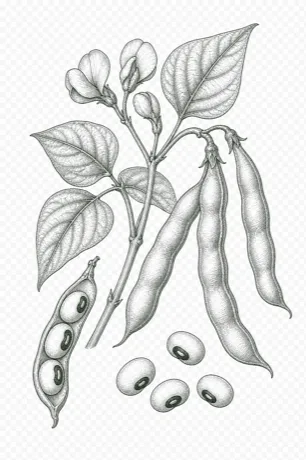
Common Black-Eyed Peas pests
Cowpea aphids are small, shiny black insects with pale legs that cluster on stem tips and pods, sucking sap, stunting growth, coating leaves with sticky honeydew, and spreading mosaic viruses. Cowpea curculio is a hard-shelled black weevil whose larvae bore into developing pods and feed inside the peas, leaving wart-like egg punctures on pods and ruined seeds. Other common feeders include bean leaf beetles and Mexican bean beetles that chew round holes and lacy patches in foliage, spider mites that cause fine stippling and webbing in hot dry spells, thrips, leafhoppers, stink bugs and pod-feeding caterpillars such as corn earworm that pierce or tunnel pods. Below ground, root-knot nematodes cause galled, knotted roots and yellow, wilting plants, while deer, rabbits, and groundhogs browse tender seedlings.
Common diseases
Cercospora leaf spot and rust show up as circular tan-to-brown spots or reddish-brown pustules on leaves, often leading to yellowing and early leaf drop in warm humid weather. Root and stem rots caused by Rhizoctonia, Pythium, Fusarium, and southern blight (a white fungal mat with tan mustard-seed-sized bodies near the soil line) cause damping-off of seedlings, wilting, and collapse of older plants. Bacterial blight produces water-soaked, angular spots that turn brown with yellow halos on leaves and dark lesions on pods. Several mosaic viruses, including blackeye cowpea mosaic and cucumber mosaic, cause mottled light-and-dark green leaves, puckering, stunting, and reduced pod set, and are spread by aphids and infected seed.
Prevention
Rotate black-eyed peas so they do not follow beans, peas, or other legumes for at least two to three years, which starves soilborne fungi, nematodes, and curculio. Space plants for good airflow, keep rows weed-free, and water at the base in the morning rather than overhead so foliage dries quickly and leaf spots and blights are discouraged. Start with certified disease-free seed and choose nematode-resistant or regionally adapted cowpea varieties where available. Remove and destroy heavily infested or diseased plants during the season and clean up all crop debris at seasons end, since curculio and many pathogens overwinter in litter and old pods.
Organic control
Manage cowpea aphids first with a strong spray of water and by conserving lady beetles, lacewings, and parasitic wasps; if colonies persist, insecticidal soap or neem applied to cover the undersides of leaves works well when populations are still small. Hand-pick bean beetles and stink bugs in the morning and drop them in soapy water, and use lightweight floating row covers over young plants to block curculio and beetles, removing the covers once bloom begins so pollinators can reach the flowers. Caterpillars such as corn earworm can be treated with a Bt product labeled for them, and spider mites usually respond to neem or insecticidal soap plus overhead rinsing during hot weather. Reserve copper-based fungicides for confirmed leaf spot or bacterial blight pressure, applying only as a protectant; always read and follow the product label for any spray you use.
Scouting & monitoring
Scout at least weekly from emergence onward, checking stem tips and the undersides of leaves for aphid clusters and the sticky honeydew and sooty mold that signal them. As plants begin to flower and set pods, inspect pods closely for the warty egg punctures and small dark weevils of cowpea curculio, and watch for chewed foliage or beetle feeding. Look over leaves for the first small spots, pustules, or mottled mosaic patterns, and pull an occasional yellowing plant to check roots for the swollen galls of root-knot nematodes so problems are caught before they spread.
Tips
Prevention pays off more than rescue sprays with this crop, so lean on rotation, clean seed, airflow, and season-end cleanup to keep curculio, nematodes, and leaf diseases in check. Scout the undersides of leaves and the developing pods every week, act early while pest numbers are low, and never compost diseased or curculio-infested plants.
General home-garden IPM guidance, focused on prevention and least-toxic control. Always read and follow the product label for any pesticide, including organic products. Page updated Sep 19, 2026.