
Chayote Nutrition & Uses
Chayote is a mild, crisp vegetable with a very high water content and a delicate flavor that takes on whatever it is cooked with. According to USDA FoodData Central, it is low in calories and light in flavor, which is part of its appeal in big-batch cooking.
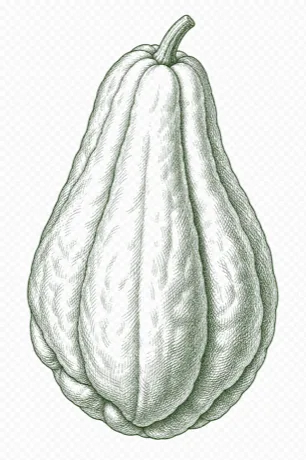
Nutritional profile
Per USDA FoodData Central, raw chayote is mostly water and low in calories, with roughly 19 calories per 100 grams. It supplies dietary fiber and provides vitamin C and folate, along with smaller amounts of vitamin K and minerals such as potassium and manganese. The composition is that of a light, watery squash rather than a concentrated source of any single nutrient.
In the kitchen
Chayote is peeled, then sliced, cubed, or halved and cooked in many ways: sauteed with garlic and onion, simmered into soups and stews, roasted, or grated raw into slaws and salads for a crisp, cucumber-like bite. In Louisiana it stars in stuffed mirliton, where halves are hollowed, mixed with shrimp or sausage and breadcrumbs, and baked as a casserole. It also works cubed in stir-fries, folded into curries, or pickled. The flavor is mild, so it readily soaks up seasonings.
Choosing & preparing
Pick firm fruits that feel heavy for their size with smooth, unblemished skin and no soft spots. Small to medium fruits are the most tender and least fibrous. Avoid any that have started to sprout or feel spongy if you plan to eat them.
Flavor pairings
Chayote pairs well with garlic, onion, lime, cilantro, chili, and tomato, and it complements shrimp, sausage, chicken, and eggs. A little cheese, butter, or a bright vinaigrette lifts its mild flesh. Its neutral flavor makes it a friendly partner in Latin American, Cajun, and Asian dishes alike.
Tips
When peeling raw chayote, some cooks note a sticky sap that can leave a filmy, tight feeling on the hands, so peel it under running water or wear gloves if you are sensitive to it. The skin on young fruit is thin enough to leave on for some dishes. The soft central seed is edible and can be cooked and eaten along with the flesh.
General food-composition information based on USDA FoodData Central. This is not medical or dietary advice; for personal guidance, consult a registered dietitian or your doctor. Page updated Sep 18, 2026.