
Growing guide · Vegetable
How to Grow Chayote
Days to maturity150 days
Spacing120 in
SeasonWarm-season
Start indoors4 wk pre-frost
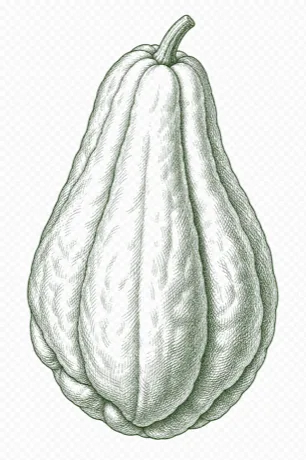
Chayote (known as mirliton in Louisiana) is a wildly vigorous perennial vining squash that US gardeners in the South, Gulf Coast, Texas, and California grow for its crisp, pale green, pear-shaped fruits. A single healthy vine can smother an arbor or fence and set dozens of fruits in a good fall, so one plant is often plenty for a household. One quirk endears it to first-timers: you plant the entire fruit, sprout and all, tucked at an angle into the soil.
When and how to plant
Chayote is a warm-season, frost-tender crop that needs a long, frost-free stretch of roughly 120 to 150 days to fruit. Because seed is inside the fruit and cannot be dried and stored separately, gardeners sprout a whole ripe fruit indoors in a pot about a month before planting, then set the rooted fruit outside a week or two after the last spring frost once the soil is warm. Give it full sun and rich, well-drained soil generous in organic matter. In zones 9 to 11 it can behave as a short-lived perennial, coming back from the crown, while in cooler zones it is grown as a single-season annual.
Care
Water deeply and regularly so the soil stays evenly moist, especially during the hot months and once fruit set begins. Work compost into the planting hole and feed lightly through the season with a balanced fertilizer, easing off heavy nitrogen so the vine does not run all to leaf. This is an enormous plant, so give it a sturdy trellis, arbor, or strong fence to climb and space plants about 10 feet apart. The vine can reach 30 feet or more, so plan supports before it takes off.
Common problems
Common cucurbit pests turn up on chayote, including cucumber beetles, aphids, squash bugs, and spider mites, while powdery mildew can coat the leaves in humid weather. Root and crown rot show up where soil stays soggy, so plant in well-drained ground and avoid waterlogging. Keep vines open and airy on their support, water at the base rather than overhead, and use floating row covers on young plants to limit early beetle damage. Handpicking pests and clearing spent debris go a long way in a home garden.
Harvest
Pick chayote young and tender, when fruits are about 4 to 6 inches long, firm, and smooth, before the single seed inside toughens. The main flush comes in late summer and fall, since the plant tends to set fruit as days shorten, and harvest continues until the first frost cuts the vine down. Cut fruits from the vine with pruners or a sharp knife, leaving a short stub of stem. Check the vine every few days at peak, because fruits size up fast and are best eaten small.
Growing Chayote in containers
Chayote is poorly suited to ordinary containers because it makes a huge, vigorous vine and needs a long frost-free season. It can work only in a very large, at least 25 to 30 gallon, container at least 18 inches deep with a substantial trellis or support structure. Use rich, free-draining potting mix, keep it evenly moist, and feed regularly through summer with a balanced vegetable fertilizer. Grow it only in warm regions or where the plant can receive a long season in full sun.
Watering & feeding Chayote
Give about 1 to 2 inches of water per week from rain and irrigation, increasing toward the higher end in hot, dry weather. Chayote is a thirsty crop and should not be allowed to repeatedly dry out while producing fruit. Water deeply at the soil line so moisture reaches the root zone, preferably in the morning, and use mulch to limit evaporation and weeds. Avoid frequent light sprinkling and keep foliage as dry as practical to reduce disease pressure. Wilting in dry soil, slow growth, or small fruit can signal underwatering, while yellowing, persistently soggy soil, and root decline can indicate overwatering.
Chayote is a moderate to heavy feeder that benefits from soil enriched with finished compost or other well-rotted organic matter before planting. It needs balanced nutrition early on, with potassium becoming especially important for flowering and fruit development. Avoid planting in poorly drained soil, even if it is fertile. Work compost into the bed before planting, then side-dress lightly after vigorous growth begins and again as flowering or fruiting starts if plants need support. Use moderate, balanced feeding rather than repeated high-nitrogen applications. Too much nitrogen can produce a large leafy vine at the expense of fruit. Keep the root area mulched several inches deep, leaving a small gap around the stem. Check soil moisture below the surface before watering, because the top inch can look dry while the root zone is still adequately moist.
Saving Chayote seeds
Chayote is usually propagated by planting a whole mature fruit, because its single seed is enclosed and does not store well once removed. Use an open-pollinated fruit if you want a plant close to the parent, since F1 hybrids do not come true from seed. Let a fully mature, unblemished fruit sprout in a cool place, then plant it whole with the sprout upward, rather than drying the seed. Treat it as short-lived planting material and use it within the next growing season.
Chayote companion plants
Grow chayote on a very sturdy support, with early radishes, lettuce, or bush beans at the outer edge of its large root zone. Nearby borage, alyssum, or other long-blooming flowers can support the insect pollinators needed for fruit set. Bush beans use lower space and can leave nitrogen-rich residues after they finish, but give chayote ample water and room. Avoid nearby squash, cucumbers, melons, and pumpkins, because they are close cucurbit relatives that compete strongly and share cucumber beetles, squash bugs, and foliar diseases.
When to plant Chayote near you
Get the exact start-indoors, transplant, and fall planting dates for Chayote at your location.
Frequently asked questions about Chayote
When should I plant Chayote in the US?
Plant Chayote in spring once all danger of frost has passed and the soil has warmed, since the vine is very sensitive to cold. In most of the US you sprout a whole ripe fruit indoors in late winter and transplant it outside after your last frost date, and gardeners in short-season northern zones often get the best results starting it early in a large pot.
How long does Chayote take to grow and produce fruit?
Chayote needs a long, warm growing season and usually does not set fruit until the shorter days of late summer and fall, so expect roughly 4 to 6 months of vine growth before harvest. Because it fruits late, gardeners in cooler regions may only get a crop right before the first frost, while warm southern zones can harvest more heavily.
How much sun does Chayote need?
Chayote grows best in full sun, meaning at least 6 to 8 hours of direct light per day. More sun and heat encourage the vigorous vine growth and fall flowering it needs to produce a good crop.
How much space does Chayote need and does it need a trellis?
Chayote is a very aggressive climbing vine that can spread many feet in a single season, so give each plant plenty of room and a strong trellis, arbor, or fence to climb. Plan on spacing plants several feet apart and providing sturdy vertical support, since the vines get heavy once loaded with fruit.
Can I grow Chayote in a container?
You can start Chayote in a large container, which is helpful in northern areas for getting a head start before it is warm enough outdoors. For a full crop it does best planted in the ground with a big trellis, but a very large pot with rich soil, steady water, and sturdy support can work in small gardens.
How do I know when Chayote is ready to harvest?
Harvest Chayote in the fall when the fruits are firm, smooth, and about the size of a large pear, usually before the first hard frost. Younger, tender fruits have the best texture, so pick them while the skin is still smooth rather than waiting until they toughen or begin to sprout.
What are common problems when growing Chayote?
The most common problem is frost, since even a light freeze can kill the tender vine and end the season before fruit forms. Gardeners also run into slow or missing fruit set when the season is too short, along with typical squash-family issues like powdery mildew, aphids, and squash bugs that you can manage with good airflow and regular scouting.
General guidance for US home gardens. Reference figures are typical values; your exact timing depends on your local frost dates and variety. Page updated Sep 18, 2026.