
Bitter Melon Nutrition & Uses
Bitter melon is a low-calorie, high-moisture vegetable, and the following describes its general composition only, as reported by USDA FoodData Central for the raw fruit (listed as balsam pear). Figures vary with variety, maturity, and growing conditions.
Nutritional profile
According to USDA FoodData Central, raw bitter melon is very low in calories, roughly 17 calories per 100 grams, and is mostly water at about 94 percent. It provides dietary fiber and small amounts of protein, with very little fat. It contains vitamin C and folate, along with lesser amounts of vitamin A, potassium, and other minerals. As a vegetable it is eaten in normal serving amounts rather than the small quantities used for herbs.
In the kitchen
The flavor is distinctly bitter, and cooks usually temper it by salting the sliced flesh and letting it drain, then rinsing, before cooking. Common preparations include stir-frying with garlic, eggs, and black bean sauce; the classic Chinese dish of bitter melon with beef; Indian karela sabzi and stuffed karela; and Filipino ampalaya with scrambled egg. The scooped-out halves are also popular stuffed with seasoned pork or shrimp and simmered in broth.
Choosing & preparing
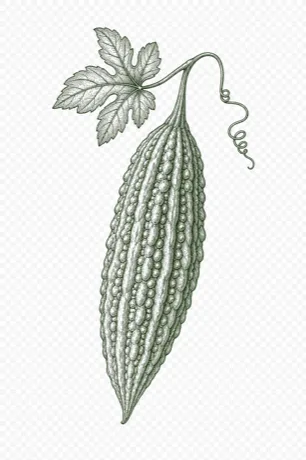
Look for firm, heavy fruit with bright to medium green skin and well-defined ridges or warty bumps, avoiding any that are yellowing, soft, or split. Smaller, younger fruit tends to be milder, while larger and paler fruit is generally more bitter. At Asian markets you will find both the smoother, pale Indian type and the larger, glossier Chinese type.
Flavor pairings
Its bitterness pairs well with bold, savory partners such as garlic, ginger, chili, soy and fermented black beans, and fatty or rich foods like eggs, pork, beef, and coconut milk. A little sweetness or sourness in the sauce, from a pinch of sugar or a squeeze of citrus, also balances the flavor. Aromatics and umami-rich seasonings round it out nicely.
Tips
To cut back the bitterness, remove the spongy core and seeds, slice thin, toss with salt, rest for 15 to 30 minutes, then squeeze and rinse before cooking. Blanching the slices briefly is another way to soften the edge. Cook it fairly quickly over high heat to keep some texture rather than letting it go mushy.
General food-composition information based on USDA FoodData Central. This is not medical or dietary advice; for personal guidance, consult a registered dietitian or your doctor. Page updated Sep 18, 2026.