
When & How to Harvest Horseradish
Horseradish is harvested for its long white taproot, dug at the end of its first full growing season. Cold weather is the trigger that makes the root worth pulling, so patience through the fall pays off.
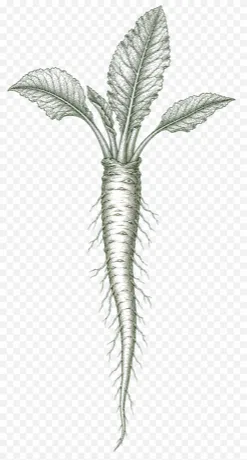
How to tell it is ready
The root is ready when the plant has grown a full season and the tops have been touched by several hard frosts in late fall, which concentrates the pungency. A mature harvestable root is firm and thick, roughly the diameter of a thumb or larger, with tan skin and crisp white flesh inside.
How to harvest
Loosen the soil deeply on all sides of the plant with a garden fork or spade, staying well away from the crown so you do not slice the root. Grasp the top and ease the long taproot straight up out of the loosened ground, working it free rather than yanking. Deliberately leave a few side roots and root fragments in the soil so the plant regrows the next spring.
Timing
The main harvest comes in late fall after frost, generally about 140 to 160 days from spring planting, though roots can also be dug in early spring before growth resumes. Harvest on a cool day, and you can make repeated passes through late fall and winter, lifting roots as needed since they tolerate frozen ground.
After the harvest
Brush off loose soil and trim the leafy tops and thin whiskery side roots. Wash the roots only when you are ready to use or store them long term, then let them dry briefly; horseradish needs no curing and goes straight into cold, humid storage.
Tips
Dig any root you intend to leave in the bed with care so it multiplies for next year, and expect volunteers from broken pieces. Save a few pencil-sized side roots to replant as cuttings for a fresh crop.
General guidance for US home gardens. Timing varies by variety and region; check your local frost dates. Page updated Sep 18, 2026.