
Grapes Pests & Diseases
Grapes are vigorous perennial vines whose biggest home-garden challenges are fungal diseases like powdery mildew, downy mildew, and black rot, all of which thrive in humid weather and dense canopies. Insect pests such as Japanese beetles, grape berry moth, and leafhoppers add pressure, while birds and raccoons often compete for the ripening fruit.
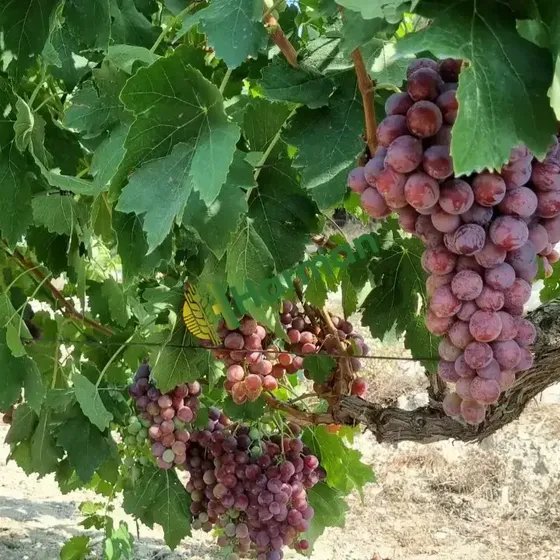
Common Grapes pests
Japanese beetles are metallic green and copper beetles that skeletonize leaves in early to midsummer, leaving lacy veins. Grape berry moth larvae are the main fruit pest, webbing and boring into berries near the stem so clusters rot and drop. Grape leafhoppers are tiny pale wedge-shaped insects that suck sap and cause fine white stippling on leaves, while grape phylloxera, an aphid-like relative, forms wart-like galls on leaf undersides and can damage roots on susceptible vines. Grape flea beetles (steely blue) chew swelling buds in spring, and in affected regions the invasive spotted lanternfly feeds on sap and coats vines in sticky honeydew and black sooty mold. Birds, raccoons, and deer are common animal pests that strip ripening clusters and browse foliage.
Common diseases
Powdery mildew is the most widespread problem, showing as white to gray powdery patches on leaves, shoots, and berries, with cracked or misshapen fruit. Downy mildew produces yellow oily spots on upper leaf surfaces with a white downy growth on the undersides in humid weather. Black rot begins as tan leaf spots ringed with dark specks and turns berries into hard, shriveled black mummies. Botrytis bunch rot (gray mold) causes a fuzzy gray fungus on ripening clusters, especially where berries are wounded or crowded, and anthracnose creates sunken bird's-eye spots on fruit and shoots. In warmer southern regions, the bacterial disease Pierce's disease, spread by sharpshooter insects, causes leaf scorch, uneven cane maturity, and vine decline.
Prevention
Choose disease-resistant varieties suited to your region, since American and hybrid grapes generally tolerate mildews and black rot far better than European types. Space vines well and use a trellis with good sun exposure and airflow, then prune every dormant season and thin shoots and leaves around clusters to keep the canopy open and quick to dry. Water at the base with drip or soaker hoses rather than overhead, and water in the morning so foliage does not stay wet. Practice strong sanitation by removing and destroying mummified berries, fallen leaves, and infected canes, because these harbor spores that reinfect vines the following spring.
Organic control
Handpick Japanese beetles into soapy water in the cool morning hours, and use fine netting to protect ripening clusters from birds and beetles. For soft-bodied pests like leafhoppers and young beetles, insecticidal soap or neem oil applied to the point of runoff can help, always reading and following the product label for timing and use on grapes. For the key fungal diseases, sulfur is effective against powdery mildew and copper can suppress downy mildew and black rot when applied preventively from bud break through fruit development, again following all label directions and avoiding sulfur on sulfur-sensitive varieties or during hot weather. Encourage beneficial insects such as lady beetles, lacewings, and parasitic wasps by avoiding broad-spectrum sprays, and consider pheromone traps or timely canopy cleanup to reduce grape berry moth.
Scouting & monitoring
Begin scouting at bud break in spring, checking swelling buds for flea beetles and new leaves for the yellow spots of downy mildew and the powdery patches of mildew. Through bloom and fruit set, inspect leaf undersides for leafhoppers and phylloxera galls, and watch clusters for the webbing and entry holes of grape berry moth. As berries ripen in late summer, check regularly for black rot mummies, gray mold on crowded clusters, and animal feeding, removing infected fruit promptly. Keep an eye out for early leaf scorch or stunted shoots in warm climates, which can signal Pierce's disease.
Tips
Prevention beats cure with grapes, so invest in resistant varieties, an open sunny canopy, and diligent removal of mummies and prunings before you ever reach for a spray. When protection is needed, sulfur and copper work best applied early and preventively rather than after disease is widespread, and a simple net will save more fruit from birds than almost anything else.
General home-garden IPM guidance, focused on prevention and least-toxic control. Always read and follow the product label for any pesticide, including organic products. Page updated Sep 19, 2026.