
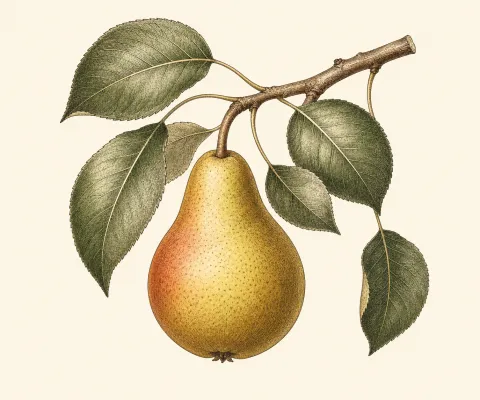
How to Grow Pear Trees
Fruit Tree
Pears (Pyrus) are long-lived deciduous fruit trees that come in two main groups: soft, buttery European pears such as Bartlett, Bosc, and Anjou, and crisp, apple-textured Asian pears. US home growers plant them because they are productive, keep well in storage, and tolerate a range of soils better than many other tree fruits. A single healthy tree can supply fresh fruit for decades with modest care.
Planting
Plant during the dormant season, in late winter or early spring while the tree is still leafless, or in fall in mild-winter areas. Choose a sunny spot with at least six to eight hours of direct sun, good air movement, and well-drained soil; pears tolerate heavier soil than many fruit trees but dislike standing water. Space standard trees about 18 to 25 feet apart, semi-dwarf trees 12 to 15 feet, and dwarf trees 8 to 12 feet. Buy grafted trees, either bare-root while dormant or container-grown, and set the graft union a few inches above the soil line.
Pollination
Most pears are not reliably self-fertile and produce much better crops when a second, different variety blooms nearby for cross-pollination. Plant two compatible varieties within about 50 feet of each other and confirm their bloom times overlap. Asian and European pears can often pollinate one another if they flower at the same time, but check the specific varieties before relying on it.
Care & pruning
Water young trees deeply and regularly through their first two or three growing seasons, then during dry spells once established, aiming for steady moisture rather than frequent light sprinkling. Keep feeding modest, since lush, overly vigorous growth makes trees more prone to disease; a soil test from your local Extension office is the best guide to whether any nutrients are needed. Spread a few inches of organic mulch such as wood chips over the root zone, keeping it pulled back from the trunk, to hold moisture and suppress weeds. Prune while dormant to build a strong central-leader framework, remove crossing, dead, or damaged wood, and open the canopy so light and air reach the interior.
Years to bear
Dwarf and semi-dwarf grafted pears usually begin bearing about 3 to 5 years after planting, while standard-size trees may take 4 to 8 years. Full production follows a few years after the first crop.
Harvest
European pears are picked when mature but still firm and green, then ripened off the tree in a cool room; a good sign is that fruit detaches easily when lifted and tilted. Asian pears, by contrast, are left to ripen on the tree and are picked when they reach full color and sweetness. Store harvested fruit cool; European pears keep for several weeks to a few months in cold storage and can be brought to room temperature to finish ripening as needed.
Common problems
The most serious pear disease is fire blight, a bacterial infection that blackens shoots and blossoms as if scorched; prune out infected wood well below the damage during dry weather and disinfect tools between cuts. Codling moth, pear psylla, and various leaf and fruit spots can also appear, and choosing disease-resistant varieties, cleaning up fallen fruit and leaves, and keeping the canopy open all help reduce pressure. For identification of a specific pest or disease and management options suited to your area, contact your local Cooperative Extension office.
Popular Pear varieties to grow
Pear choice depends on climate, fire blight pressure, and pollination compatibility. Most European and Asian pears crop better with a compatible second cultivar nearby, and harvest timing varies from late summer through fall.
| Variety | Type | Season | Notes | Best for |
|---|---|---|---|---|
| Bartlett | European pear, needs pollinizer | late summer | The classic yellow pear, prized for fragrant, juicy flesh and excellent flavor when ripened off the tree. It is a leading choice for fresh use and preserving. | fresh eating, canning |
| Anjou | European pear, needs pollinizer | fall | A green winter pear with smooth, sweet flesh and good storage ability. It ripens after harvest and is versatile in the kitchen. | fresh eating, baking, storage |
| Bosc | European pear, needs pollinizer | fall | Recognizable by its russet-brown skin, Bosc has firm, aromatic flesh that holds its shape when cooked. It is a favorite for baking and poaching. | baking, poaching |
| Seckel | European pear, needs pollinizer | early fall | A small, very sweet pear with spicy, dessert-like flavor. Its compact fruit size makes it excellent for snacks and preserves. | fresh eating, canning |
| Kieffer | European hybrid, needs pollinizer | fall | A vigorous, heat-tolerant pear with crisp, firm fruit. It is commonly grown in the South and is best used for processing rather than soft dessert fruit. | canning, baking, warm climates |
| Shinseiki | Asian pear, needs pollinizer | late summer | Produces round yellow fruit with crisp, juicy flesh and a mild sweet flavor. Asian pears are generally eaten while still crisp. | fresh eating |
| Hosui | Asian pear, needs pollinizer | late summer to early fall | A popular russeted Asian pear with especially juicy, sweet flesh. It offers a richer flavor than many pale-skinned Asian pear cultivars. | fresh eating |
Variety notes are general guidance for US home gardens; chill hours, hardiness, and pollination needs vary, so confirm suitability for your zone and check with a local nursery. Availability differs by supplier.
Storing Pear
Keep mature, unripe pears at 30 to 32 F and 90 to 95 percent relative humidity. Depending on variety, home-grown pears can store from several weeks to 2 to 4 months, while ripe pears last only about 3 to 7 days in the refrigerator. Most common pears should be picked mature but firm and ripened off the tree at room temperature, then chilled when their neck yields to gentle pressure. Pears freeze well as treated slices, and any canning or preserving should use a tested USDA or NCHFP recipe.
Using Pear
A ripe pear is sweet, fragrant, and buttery or gently crisp depending on the variety. Eat it fresh, poach it, bake it into tarts, preserve it, or pair it with cheese and salads. The core and seeds are usually discarded, so avoid eating crushed seeds in quantity.
General guidance for US home growers. Variety and pollination needs vary by region; confirm with your local Cooperative Extension office. Page updated Sep 19, 2026.