
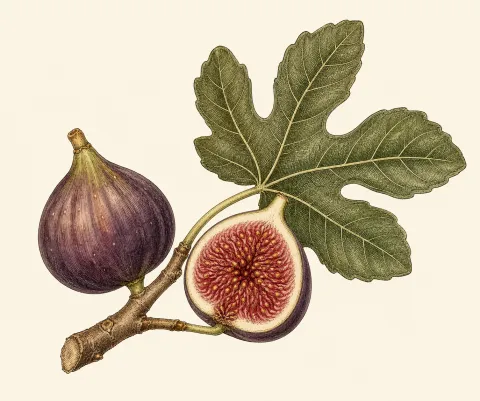
How to Grow Fig Trees
Fruit Tree
The common fig (Ficus carica) is a fast-growing, deciduous tree or large shrub prized for its sweet, soft fruit and bold, tropical-looking leaves. US home growers plant figs because they bear quickly, need little fuss, and can thrive in the ground in mild regions or in a large pot that gets moved to shelter in colder areas. Many gardeners also enjoy that figs are one of the few tree fruits that rarely require spraying to produce a good crop.
Planting
Plant figs during the dormant season, in late winter or early spring after the hardest freezes have passed. Choose a warm, sheltered, full-sun site with at least six to eight hours of direct light, and give each tree about 10 to 15 feet of space, or less if you plan to keep it pruned small. Figs tolerate many soils but do best in well-drained ground with a neutral to slightly alkaline pH; avoid spots where water stands. You can buy bare-root or potted, container-grown trees, or start a plant from a hardwood cutting or rooted sucker taken from a healthy, named variety.
Pollination
Most fig varieties grown by US home gardeners are self-fertile and set fruit without a pollinator, so a single tree will produce a crop on its own. These common-type figs do not need a second variety or an insect to pollinate them. Avoid Smyrna and San Pedro types unless you live where the specialized fig wasp is present, since those require pollination that home growers usually cannot provide.
Care & pruning
Water young trees deeply and regularly through their first two growing seasons to establish strong roots, then water established trees during dry spells, since drought stress can cause fruit to drop or split. A layer of organic mulch spread over the root zone, kept a few inches away from the trunk, helps hold moisture and moderate soil temperature. Figs are light feeders, so use a balanced approach and avoid pushing heavy growth, which produces leaves at the expense of fruit and makes the tree more cold tender. Prune while dormant to remove dead or crossing wood and to keep the tree at a size you can manage and harvest easily; you can also train figs to a low, open, multi-branched form.
Years to bear
Figs bear young, often producing some fruit within one to two years of planting. Trees usually reach reliable, fuller production by the third or fourth year.
Harvest
Figs do not ripen further once picked, so harvest them only when fully ripe on the tree, when the fruit softens, colors up, and often droops on its stem. Ripe figs bruise easily, so pick gently, and consider wearing gloves or long sleeves because the sap can irritate skin. Fresh figs keep only a few days in the refrigerator, so eat them soon after picking, or dry, freeze, or make preserves to store the surplus longer.
Common problems
Common problems include birds and other wildlife eating ripe fruit, ants and other insects entering fruit through the open eye, and root-knot nematodes in sandy soils, along with fruit souring and rots in wet weather. Prevent trouble by keeping the area clean of dropped fruit, harvesting promptly, choosing a sunny airy site with good drainage, and using netting to protect fruit from birds. For an accurate diagnosis and locally suited variety and management advice, contact your county Cooperative Extension office.
Popular Fig varieties to grow
Choose figs for your winter minimum and summer heat, as most common types need mild winters or protection in colder zones. Many figs are self-fruitful, but ripening season and cold hardiness vary substantially.
| Variety | Type | Season | Notes | Best for |
|---|---|---|---|---|
| Brown Turkey | self-fruitful, cold-hardy | mid to late summer | A dependable brown-purple fig with pink flesh and a mild, sweet flavor. It often produces an early breba crop followed by a main crop. | fresh eating, colder gardens with winter protection |
| Chicago Hardy | self-fruitful, cold-hardy | late summer to early fall | A notably cold-tolerant fig that can regrow from the roots after winter injury in many areas. Its small to medium purple fruit has richly sweet red flesh. | cold climates, containers, fresh eating |
| Celeste | self-fruitful, small purple fruit | early to mid summer | Celeste bears very sweet, compact violet-brown figs with closed eyes that are less prone to souring in humid conditions. It is a classic Southern home-garden variety. | fresh eating, preserves, humid climates |
| Mission | self-fruitful, black-purple | late summer to fall | A longtime California standard with dark skin, strawberry-colored pulp, and a rich, jammy flavor. It needs a long warm season for its best main crop. | fresh eating, drying, warm climates |
| Kadota | self-fruitful, green-yellow | late summer to fall | Kadota produces pale green to yellow figs with amber flesh and a mild sweetness. The firm fruit is especially valued for preserving. | canning, preserves, drying |
| LSU Purple | self-fruitful, humid-climate adapted | mid to late summer | Developed by Louisiana State University, this variety bears medium purple fruit with red flesh and good sweetness. It is widely grown in hot, humid regions. | fresh eating, Southern gardens |
Variety notes are general guidance for US home gardens; chill hours, hardiness, and pollination needs vary, so confirm suitability for your zone and check with a local nursery. Availability differs by supplier.
Storing Fig
Store ripe figs at 32 to 36°F and 90 to 95 percent relative humidity, in a shallow container to prevent bruising. Fresh figs usually keep only 2 to 3 days, and at most about 5 days when exceptionally fresh and carefully handled. Figs do not improve much after harvest, so pick them soft, fully colored, and ripe. Freeze whole or sliced figs, dry them, or use tested USDA or NCHFP recipes for fig preserves and canning.
Using Fig
Ripe figs are soft, jammy, and seedy, with honeyed sweetness and a gentle berry-like flavor. They are delicious fresh, baked, grilled, dried, made into jam, or paired with cheese and savory dishes. Eat figs only when ripe and sound, and discard fruit with mold, sour decay, or insect damage.
General guidance for US home growers. Variety and pollination needs vary by region; confirm with your local Cooperative Extension office. Page updated Sep 18, 2026.