
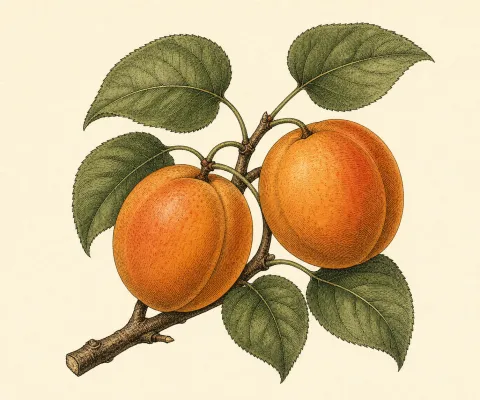
How to Grow Apricot Trees
Fruit Tree
Apricots (Prunus armeniaca) are small, fast-bearing stone fruit trees prized for their sweet, aromatic fruit that can be hard to find truly fresh in stores. US home growers like them because a single healthy tree fits in a modest yard yet can produce heavily, and the fruit ripens early in the summer before most other tree fruit.
Planting
Plant bare-root trees in late winter or early spring while they are still dormant, or set out potted trees in spring or early fall. Choose a full-sun site with at least six to eight hours of direct light and well-drained soil, and avoid low spots where cold air and frost tend to settle. Space standard trees about 20 to 25 feet apart, and dwarf or semi-dwarf trees roughly 12 to 15 feet apart. Buy grafted, named cultivars from a reputable nursery for reliable fruit quality, and set the tree so the graft union stays a few inches above the soil line.
Pollination
Most apricot varieties are self-fertile, so a single tree will usually set a good crop on its own. Planting a second compatible variety nearby can still improve fruit set and boost yields. If you pick a cultivar known to be self-unfruitful, be sure to plant a suitable pollinator partner within pollinating distance.
Care & pruning
Water young trees deeply and regularly through their first couple of growing seasons to establish roots, then water established trees during dry spells, especially while the fruit is sizing up. Feed lightly in early spring guided by a soil test and how vigorously the tree is growing, and keep a ring of mulch a few inches thick around the base while pulling it back from the trunk. Prune yearly, in late summer or early spring, to an open-center (vase) shape so light and air reach the interior. Thin the young fruit to about 2 to 4 inches apart so the apricots that remain grow larger and the branches are not overloaded.
Years to bear
Apricots bear quickly for a tree fruit, often giving a first real crop about 2 to 4 years after a grafted tree is planted. Trees generally reach full production by around their fifth year.
Harvest
Harvest from late spring through midsummer, depending on variety and region, when the fruit turns full color and gives slightly to gentle pressure. Ripe apricots release from the branch with a soft twist and are best eaten or used within a few days. Keep ripe fruit in the refrigerator for up to about a week, or dry, can, or freeze the extras for longer storage.
Common problems
Common problems include brown rot, bacterial canker, and pests such as aphids, plum curculio, and borers, while early frost damage to the blossoms is a frequent cause of lost crops. You can prevent much of this by planting in a sunny, airy spot, cleaning up fallen fruit and leaves, pruning for good airflow, and choosing disease-resistant varieties. For an accurate diagnosis and locally suited advice, contact your county Cooperative Extension office.
Popular Apricot varieties to grow
Apricots need adequate winter chill but are vulnerable to late frosts because they bloom very early. Choose a cultivar suited to your region, and favor self-fruitful types where only one tree can be planted.
| Variety | Type | Season | Notes | Best for |
|---|---|---|---|---|
| Blenheim | self-fruitful, classic | mid to late summer | Also sold as Royal Blenheim, this classic apricot has rich, aromatic flavor and tender orange flesh. It is prized for both fresh eating and drying, but its early bloom can be risky in frost-prone sites. | fresh eating, drying, and preserves |
| Moorpark | self-fruitful, large fruit | midseason | A historic cultivar known for very large, flavorful fruit with deep orange flesh. It is excellent for dessert and preserving when grown in an area with dependable spring weather. | fresh eating and canning |
| Tilton | self-fruitful, firm flesh | mid to late summer | Produces firm, tart-sweet fruit that holds up well for processing. It is a long-standing favorite for canning and drying. | canning, drying, and baking |
| Harcot | cold-hardy, self-fruitful | midseason | A Canadian-bred apricot valued for winter hardiness and good fruit quality. The firm, sweet fruit is useful fresh or processed. | colder regions and fresh eating |
| Goldcot | cold-hardy, self-fruitful | midseason | A dependable cold-climate selection with medium to large, orange fruit. It is commonly grown where more tender apricots struggle with winter cold. | cold climates and preserves |
Variety notes are general guidance for US home gardens; chill hours, hardiness, and pollination needs vary, so confirm suitability for your zone and check with a local nursery. Availability differs by supplier.
Storing Apricot
Store fully ripe apricots at 32 to 36°F and 90 to 95 percent relative humidity, where they usually keep 3 to 5 days. Apricots ripen after harvest, so firm, nearly mature fruit can finish ripening at room temperature for 1 to 3 days before refrigeration. Refrigerate only once they are fragrant and yielding slightly, because cold fruit will not improve in flavor. Freeze halved apricots in syrup, sugar pack, or dry pack, or use tested USDA or NCHFP recipes for jams and canning.
Using Apricot
Ripe apricots are soft, juicy, and fragrant, with a bright sweet-tart flavor and velvety skin. Eat them fresh or use them in tarts, jam, compotes, chutney, drying, and preserves. Discard the pit and kernel, as apricot kernels can contain cyanide-forming compounds and should not be eaten.
General guidance for US home growers. Variety and pollination needs vary by region; confirm with your local Cooperative Extension office. Page updated Sep 20, 2026.