
Luffa Gourd Pests & Diseases
As a member of the cucurbit family, luffa gourd faces the same core challenges as cucumbers and squash, mainly cucumber beetles that spread bacterial wilt and foliar diseases like powdery and downy mildew. Because luffa needs a long, warm season to mature its fibrous sponges, protecting the vines and leaves from early-season pests and late-season mildew is key to a good harvest.
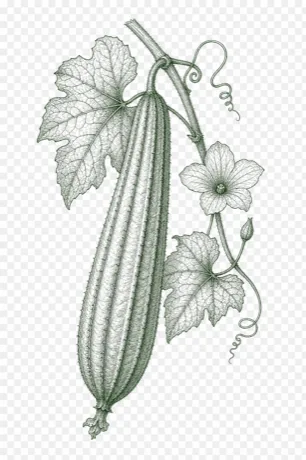
Common Luffa Gourd pests
Striped and spotted cucumber beetles are the most damaging pest, chewing small holes in leaves and flowers while transmitting bacterial wilt as they feed. Squash bugs (flat, gray-brown shield-shaped bugs with clusters of bronze eggs on leaf undersides) suck sap and cause wilting and yellow stippling, and the squash vine borer can tunnel into the main stem, causing sudden wilt and sawdust-like frass near the base. Watch also for melon and cotton aphids clustered on new growth and leaf undersides, two-spotted spider mites that cause fine yellow speckling and webbing in hot dry spells, and pickleworm on young fruit in the South. Among animal pests, deer, rabbits, groundhogs, and voles will browse tender vines, so fencing helps in rural gardens.
Common diseases
Powdery mildew is the most common disease, showing as white powdery patches on leaves and stems that spread and cause leaves to yellow and die back late in the season. Downy mildew appears as angular yellow blotches on the upper leaf surface bounded by veins, with grayish fuzz underneath in humid weather. Bacterial wilt, carried by cucumber beetles, causes whole vines to wilt and collapse even when soil is moist, and mosaic viruses (such as cucumber mosaic virus) produce mottled, distorted, stunted leaves. Gardeners may also see angular leaf spot as water-soaked angular lesions, anthracnose and gummy stem blight as dark spots and stem cankers, and Fusarium wilt causing one-sided yellowing and wilting.
Prevention
Rotate cucurbits so luffa does not follow squash, cucumbers, or melons in the same bed for two to three years, and clean up and remove old vines at season end to reduce overwintering pests and disease. Give vines plenty of space and grow them on a sturdy trellis to improve airflow and keep foliage dry, which slows mildews. Water at the base with drip or a soaker hose early in the day rather than wetting the leaves, and choose disease-tolerant varieties and healthy transplants when available. Because luffa needs a long season, start seeds indoors and transplant after the soil is warm, and keep plants well fed and mulched to support vigorous, resilient growth.
Organic control
Cover young transplants with floating row covers from planting until flowering to exclude cucumber beetles, squash bugs, and borers, then remove the covers so bees can pollinate. Scout early and hand-pick squash bugs, their egg clusters, and adult beetles into soapy water, and encourage beneficial insects like lady beetles, lacewings, and parasitic wasps by keeping some flowering plants nearby. For aphids, spider mites, and whiteflies, a strong spray of water followed by insecticidal soap or horticultural oil applied to leaf undersides works well, and neem oil can help suppress several soft-bodied pests and mildews. For powdery and downy mildew, apply an organic option such as a sulfur or copper product or a labeled biofungicide at the first sign and repeat as directed, spraying in cooler hours to avoid leaf burn. Always read and follow the product label for timing, safety, and application, and note that sulfur and oils should not be combined or used in high heat.
Scouting & monitoring
Begin scouting at transplanting and check at least twice a week through the season, focusing on the undersides of leaves and the crown near the soil. Early on, look for cucumber beetles on flowers and new leaves and for squash bug egg clusters, since catching these before populations build prevents both feeding damage and disease spread. From midsummer, inspect the base of main stems for borer entry holes and frass, and watch older leaves for the first white powdery spots or angular yellow patches that signal mildew. Any sudden wilting of a whole vine should be checked promptly for bacterial wilt or vine borer so you can remove and dispose of affected growth.
Tips
Row covers early plus a trellis for airflow prevent most of luffa's worst problems, so invest in both before pests and mildew take hold. Scout twice a week and act at the first sign, since a long-season crop like luffa rewards steady, early attention far more than a single rescue spray.
General home-garden IPM guidance, focused on prevention and least-toxic control. Always read and follow the product label for any pesticide, including organic products. Page updated Sep 18, 2026.