
When & How to Harvest Lovage
Harvesting lovage is a cut-and-come-again affair that runs from late spring into fall on an established plant. Because the crown is a long-lived perennial, careful picking keeps it productive for years. You can gather leaves, stems, seeds, and roots, each at its own time.
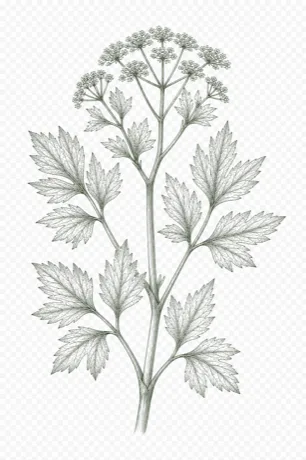
How to tell it is ready
Lovage leaves are ready to pick as soon as the plant has leafed out fully in late spring and the foliage is a rich, glossy green. The best-flavored, most tender leaves come before the tall flower stalks emerge in early summer. Seeds are ready when the flower heads turn from green to brown and dry on the plant in late summer.
How to harvest
Snip individual outer stalks at their base with clean scissors or a sharp knife, working from the outside of the clump so the growing center is left intact. Take no more than about one-third of the plant at any one harvest to keep it strong. To collect seeds, clip the whole dried seed head into a paper bag; to harvest root, dig a mature crown in fall of the second year or later and cut off a portion.
Timing
Pick in the cool of the morning after the dew dries, when the leaves are most turgid and aromatic. Make multiple light passes through the season rather than one big cut, and expect first leaf harvests around 90 days from a spring sowing, with the plant reaching full size in its second year. Gather seeds once in late summer as the heads brown.
After the harvest
Rinse cut leaves and stems in cool water and gently shake or spin off the excess, then refrigerate promptly to keep them crisp. Dry harvested seeds fully on a screen or in an airy spot before storing them in a jar. Brush soil off dug roots and let them dry briefly before cool, damp storage or processing.
Tips
Cutting the flower stalks as they appear pushes the plant to make more tender leaves instead of going to seed. Harvest a little and often rather than stripping the plant, and always leave the central crown untouched so it powers next season's growth.
General guidance for US home gardens. Timing varies by variety and region; check your local frost dates. Page updated Sep 19, 2026.