
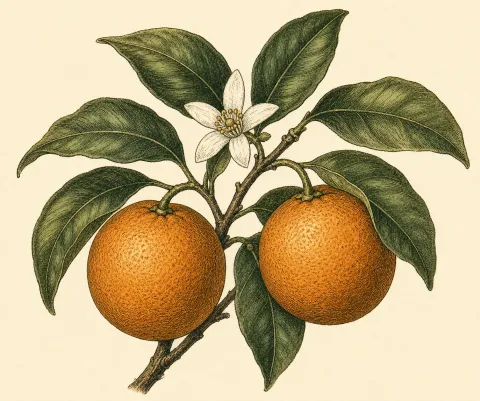
How to Grow Orange Trees
Citrus
The orange (Citrus sinensis) is an evergreen citrus tree prized for its glossy foliage, fragrant white blossoms, and sweet, juicy fruit. US home growers plant it for fresh eating and juicing, and because a single healthy tree can supply a family with fruit through the winter months. In mild regions it doubles as an attractive landscape tree, and it also adapts well to large containers.
Planting
Plant oranges in early spring after the last hard frost, once the soil has warmed and the danger of freezing has passed. Choose a spot with full sun, at least 8 hours a day, and well-drained soil, ideally slightly acidic to neutral; avoid low areas where cold air or water collects. Space standard trees about 12 to 15 feet apart, or smaller dwarf types 6 to 10 feet apart, and set the graft union a few inches above the soil line. Buy a grafted nursery tree, either bare-root while dormant or an established potted tree, and plant it at the same depth it grew in the container.
Pollination
Most sweet oranges are self-fertile, so a single tree will set fruit on its own without a second variety nearby. This makes oranges a good choice for a small yard or a lone container tree. Bees and other pollinators visiting the blossoms can still help improve fruit set.
Care & pruning
Water young trees deeply once or twice a week while they establish, then settle into regular deep soakings that let the top few inches of soil dry between waterings; citrus dislike constantly soggy roots. Feed with a nitrogen-rich approach during the growing season, splitting feeding into several lighter applications from late winter through summer, and keep the tree well mulched. Spread an organic mulch in a wide ring but hold it back several inches from the trunk to prevent rot. Prune lightly to remove dead, crossing, or crowded wood and any suckers below the graft, and shape the canopy after the main harvest.
Years to bear
A grafted orange tree usually begins bearing fruit within 3 to 5 years of planting. Trees typically reach full, reliable production around 5 to 6 years old.
Harvest
Oranges ripen on the tree from late fall into spring depending on the variety, and unlike many fruits they do not continue to sweeten after picking. Harvest when the fruit is fully colored and tastes sweet; clip or gently twist ripe fruit from the stem, taking care not to tear the peel. Oranges hold well on the tree for weeks, and picked fruit keeps for a few weeks in the refrigerator.
Common problems
Common orange pests include aphids, scale insects, mites, and citrus leafminer, while diseases such as root rot and various leaf and fruit spots can appear in wet conditions. Prevent problems by giving trees good air circulation, watering at the base rather than overhead, keeping the area free of fallen leaves and fruit, and inspecting the foliage regularly. For accurate identification and region-specific guidance, especially regarding quarantines for serious citrus diseases, contact your local Cooperative Extension office.
Popular Orange varieties to grow
Oranges require a long, warm growing season and reliable frost protection, making containers practical outside mild citrus regions. Most sweet orange cultivars are self-fertile, while harvest season and flavor differ widely among navel, Valencia, and blood oranges.
| Variety | Type | Season | Notes | Best for |
|---|---|---|---|---|
| Washington Navel | self-fertile, seedless navel | winter | Washington Navel is a classic seedless orange with easy-peeling skin and sweet, richly flavored flesh. It is excellent for eating fresh but less suited to juicing because juice can become bitter after storage. | fresh eating |
| Valencia | self-fertile, sweet orange | spring through summer | Valencia is a late-ripening orange known for abundant juice and excellent flavor. It is the traditional choice for home-grown orange juice in warm climates. | juicing, fresh eating |
| Cara Cara | self-fertile, pink-fleshed navel | winter to early spring | Cara Cara is a navel orange with rosy pink flesh, low acidity, and a sweet berry-like flavor. It is seedless and easy to peel. | fresh eating, salads |
| Moro | self-fertile, blood orange | winter | Moro develops deep red to nearly purple flesh in climates with cool nights during ripening. Its flavor is sweet-tart with distinctive berry-like notes. | fresh eating, juice, cool-winter citrus areas |
| Sanguinelli | self-fertile, blood orange | late winter to spring | Sanguinelli is a late blood orange with sweet, juicy flesh and red pigmentation that strengthens under cool conditions. It is valued for both eating and juicing. | fresh eating, juicing |
| Hamlin | self-fertile, early sweet orange | fall to early winter | Hamlin is an early sweet orange that is productive and juicy, with relatively few seeds. Its mild flavor makes it a popular early-season juice orange. | juicing, early harvest |
Variety notes are general guidance for US home gardens; chill hours, hardiness, and pollination needs vary, so confirm suitability for your zone and check with a local nursery. Availability differs by supplier.
Storing Orange
Store oranges at 38 to 48°F and 85 to 90 percent relative humidity, preferably in a breathable bag or loose container in the refrigerator. They usually keep 2 to 4 weeks refrigerated, compared with roughly 1 week at room temperature. Oranges do not ripen after harvest, so harvest them fully mature, since color alone can be misleading in warm regions. Freeze juice, segments, or zest, or use tested USDA or NCHFP recipes for marmalade and other home-canned citrus products.
Using Orange
Ripe oranges are juicy and segmented, with sweet-tart citrus flavor and fragrant peel. They are ideal for fresh eating, juice, marmalade, salads, baking, sauces, and candied peel. The flesh and washed zest are edible, but discard seeds and avoid fruit with mold or soft rot.
General guidance for US home growers. Variety and pollination needs vary by region; confirm with your local Cooperative Extension office. Page updated Sep 19, 2026.