
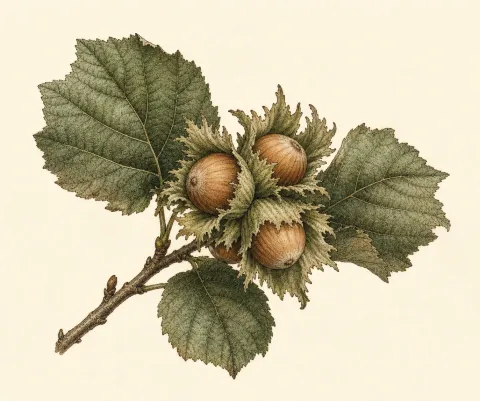
How to Grow Hazelnut Trees
Nut Tree
The hazelnut, also called the filbert, is a small multi-stemmed tree or large shrub grown for its sweet, round nuts. Home growers like it because it stays compact, comes into bearing relatively quickly, and fits neatly into small yards, edible hedgerows, or the corner of a garden. The nuts are prized for fresh eating, baking, and roasting.
Planting
Plant bare-root or potted trees during the dormant season, from late fall through early spring, while the plant is not actively growing. Choose a site with full sun and well-drained soil, and space plants about 15 to 20 feet apart, or a bit closer if you want a hedgerow. Buy nursery stock of disease-resistant varieties suited to your region, and set the plant at the same depth it grew in the nursery. Work some organic matter into the planting area and keep the soil evenly moist while the roots establish.
Pollination
Hazelnuts are wind-pollinated and largely self-incompatible, so they need at least two different, compatible varieties planted near each other to set a good crop. Place a compatible pollenizer within about 50 feet of the main plant. Bloom occurs in late winter, so choose varieties whose flowering times overlap.
Care & pruning
Water deeply and regularly during the first few years and through dry spells, since hazelnuts have shallow roots that dry out easily. Feed lightly in early spring based on a soil test, and keep a layer of organic mulch around the base to hold moisture and suppress weeds, keeping the mulch pulled back from the trunk. Train the plant either as a single-trunk tree or as an open, multi-stemmed shrub, and remove suckers regularly if you want the tree form. Prune in late winter to thin out crowded, crossing, or dead wood and to open the canopy to light and air.
Years to bear
Hazelnuts usually begin producing a light crop about 3 to 4 years after planting. They reach full production by roughly year 8.
Harvest
Nuts ripen in late summer into fall and drop to the ground when mature, so many growers simply gather them from clean ground or from a tarp spread beneath the plant. Collect them promptly to beat squirrels, then dry the nuts in a single layer in a cool, airy place for a few weeks. Store dried in-shell nuts in a cool, dry spot, or refrigerate or freeze shelled kernels for longer keeping.
Common problems
Eastern filbert blight is the most serious disease across much of the country, so planting resistant varieties and pruning out infected branches well below the cankers is the best defense. Squirrels, filbertworm, and big bud mite can also reduce the crop, and keeping the ground clean of old nuts and debris helps limit problems. For an accurate diagnosis and management options suited to your area, contact your local Cooperative Extension office.
Popular Hazelnut varieties to grow
Hazelnuts need compatible pollinizers, so plant two or more varieties with overlapping pollen shed unless a local nursery provides a compatible pairing. Choose cultivars adapted to your climate and, where eastern filbert blight occurs, prioritize resistant selections.
| Variety | Type | Season | Notes | Best for |
|---|---|---|---|---|
| Jefferson | disease-resistant, needs pollinizer | early fall | An Oregon State University cultivar valued for large, high-quality kernels and resistance to eastern filbert blight. It is productive in suitable hazelnut regions. | home orchards, fresh nuts, roasting |
| Yamhill | disease-resistant, compact, needs pollinizer | early fall | Yamhill is a relatively compact Oregon State University selection with good eastern filbert blight resistance. Its smaller nuts are well suited to home plantings. | smaller gardens, roasting |
| Barcelona | classic European hazelnut, needs pollinizer | early fall | A traditional commercial cultivar with large round nuts and vigorous growth. It remains popular where disease pressure is low or managed. | fresh nuts, roasting, mild climates |
| Theta | pollinizer, disease-resistant | early fall | Theta is commonly used as a compatible pollinizer for Oregon hazelnut cultivars and also produces nuts. It has resistance to eastern filbert blight. | pollination partner, home orchards |
| Wepster | disease-resistant, needs pollinizer | early fall | Wepster produces attractive, high-quality kernels and has eastern filbert blight resistance. It is a useful choice for growers seeking modern blight-resistant material. | roasting, home orchards |
Variety notes are general guidance for US home gardens; chill hours, hardiness, and pollination needs vary, so confirm suitability for your zone and check with a local nursery. Availability differs by supplier.
Storing Hazelnut
Store fully dried hazelnut kernels in an airtight container at 32 to 45°F with low humidity, ideally below 65 percent relative humidity. Refrigerated kernels generally keep 6 to 12 months and frozen kernels about 1 to 2 years, while in-shell nuts keep somewhat longer when cool and dry. Hazelnuts do not ripen after harvest, so cure and dry them fully before storage. Freeze kernels in moisture-proof packaging for the best long-term quality, or roast them for convenient shorter-term use.
Using Hazelnut
Ripe hazelnuts are crisp and rich, with a sweet, buttery flavor that becomes toastier and more fragrant when roasted. Use them for snacking, praline, pastries, cookies, chocolate spreads, nut butter, and savory toppings. Eat only properly identified edible hazelnuts, and discard nuts that are moldy, rancid, or visibly damaged.
General guidance for US home growers. Variety and pollination needs vary by region; confirm with your local Cooperative Extension office. Page updated Sep 18, 2026.