
How to Grow Chestnut Trees
Nut Tree
Chestnuts are large, fast-growing nut trees prized for their sweet, starchy nuts that can be roasted, boiled, or ground into flour. Most US home growers plant Chinese chestnut or blight-resistant hybrids rather than the native American chestnut, which was nearly wiped out by chestnut blight. A mature tree serves as both a handsome shade tree and a dependable source of homegrown nuts.
Planting
Plant dormant, bare-root trees in late winter or early spring, or set out container-grown trees in spring or fall. Choose a full-sun site with deep, well-drained, slightly acidic soil, since chestnuts do poorly in heavy, wet, or limey ground. Space standard trees about 40 feet apart, because they grow large and wide-spreading. Buy grafted named varieties or seedlings from a reputable nursery, and plan to plant more than one tree.
Pollination
Chestnuts are not reliably self-fertile, so you need at least two genetically different trees for a good nut set. Pollen moves by wind and insects, so plant compatible varieties within roughly 50 to 100 feet of each other. A lone tree will flower but usually produces few nuts or empty shells.
Care & pruning
Water young trees deeply and regularly through their first two or three growing seasons, especially during summer dry spells, and then during drought once they are established. Spread a few inches of organic mulch over the root zone to hold moisture and suppress weeds, keeping it pulled back from the trunk. Have the soil tested and feed only lightly in spring if growth is weak, since chestnuts prefer acidic conditions and modest feeding. Train young trees to a single central leader by removing competing, crossing, or dead branches during the dormant season.
Years to bear
Grafted trees often begin bearing nuts in about 3 to 5 years, while seedling trees may take 5 to 7 years or more. Full production usually comes once the tree is well established.
Harvest
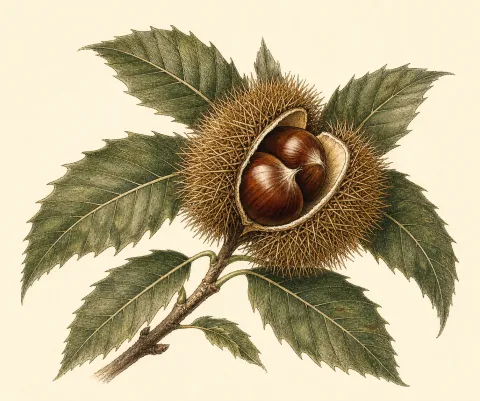
Nuts ripen in fall, roughly September through October, and drop to the ground inside spiny burrs. Gather them every day or two so they do not dry out or spoil, wearing thick gloves to handle the sharp burrs. Store cleaned nuts in the refrigerator, where a short curing period improves their sweetness and they keep for several weeks when held cool and humid.
Common problems
Common concerns include chestnut blight, chestnut weevils, and root rot in poorly drained soil, though choosing resistant Chinese or hybrid trees and a well-drained site prevents most trouble. Rake up and destroy fallen burrs and nuts to reduce weevil numbers, and prune out dead or diseased wood. For local pest identification and current guidance, contact your county Cooperative Extension office.
Popular Chestnut varieties to grow
Plant at least two compatible chestnut cultivars for cross-pollination, and give trees ample space and well-drained soil. Select blight-resistant Chinese or hybrid chestnuts for most eastern US home gardens, while harvest comes in fall.
| Variety | Type | Season | Notes | Best for |
|---|---|---|---|---|
| Colossal | European-Japanese hybrid, needs pollinizer | early to mid fall | A widely planted commercial hybrid with very large nuts and a spreading tree habit. It needs compatible chestnut pollen and is better suited to climates where chestnut blight pressure is managed. | large nuts and mild-climate orchards |
| Dunstan | blight-resistant hybrid, needs pollinizer | fall | A named hybrid line selected for large, sweet nuts and resistance to chestnut blight. Plant it with another compatible chestnut selection for dependable crops. | eastern home orchards and roasting |
| Qing | Chinese chestnut, needs pollinizer | mid fall | A well-known Chinese chestnut cultivar valued for good nut quality and chestnut-blight resistance. Its nuts are sweet and useful for roasting or cooking. | blight-prone areas and roasting |
| Peach | Chinese chestnut, needs pollinizer | mid fall | An established Chinese chestnut cultivar with good-quality, sweet nuts and useful blight resistance. It is commonly planted with another Chinese chestnut cultivar for pollen compatibility. | home orchards and fresh roasting |
| Eaton | blight-resistant hybrid, needs pollinizer | mid fall | A chestnut hybrid selected for large, attractive nuts and resistance to chestnut blight. It needs a different compatible chestnut nearby to set a full crop. | large-nut home orchards |
Variety notes are general guidance for US home gardens; chill hours, hardiness, and pollination needs vary, so confirm suitability for your zone and check with a local nursery. Availability differs by supplier.
Storing Chestnut
Store fresh chestnuts at 32 to 34°F and high humidity, about 90 to 95 percent, in a perforated bag so they do not dry out. They generally keep 2 to 3 weeks refrigerated, sometimes up to a month when very fresh, but should be checked often for mold. Chestnuts do not ripen after harvest, and they are perishable nuts rather than shelf-stable dry nuts. Freeze peeled, cooked chestnuts for several months, or dry them thoroughly for longer storage.
Using Chestnut
Cooked chestnuts are soft and starchy, with a sweet, earthy, potato-like flavor rather than the oily crunch of most nuts. Roast, boil, puree, stuff, candy, or add them to soups, baked goods, and desserts. Do not eat horse chestnuts, which are not edible, and cook edible chestnuts thoroughly before eating.
General guidance for US home growers. Variety and pollination needs vary by region; confirm with your local Cooperative Extension office. Page updated Sep 18, 2026.