
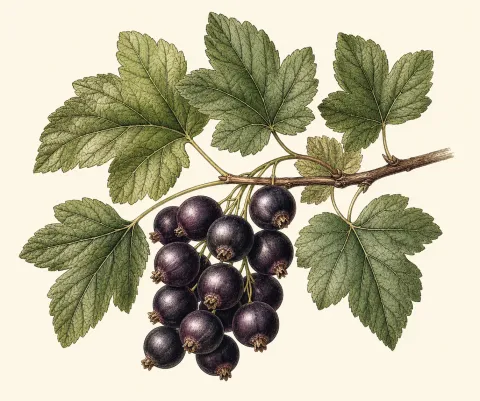
How to Grow Jostaberry
Bush Berry
Jostaberry is a thornless hybrid of black currant and gooseberry, combining a vigorous growth habit with dark berries that are used fresh or processed. The shrubs are larger than many currants and can be very productive once mature. Their flavor is distinct and often stronger when fruit is fully ripe.
Planting
Plant jostaberry in full sun to light shade in fertile, well-drained soil. Give it more space than a typical currant because mature plants can become broad and vigorous. Set plants at about nursery depth and water deeply to settle the soil. Apply mulch to conserve moisture and limit weeds around the base.
Care
Keep soil evenly moist, especially during the first years and during fruit development. Prune annually to remove oldest canes and keep a balance of young, vigorous shoots. Thin crowded interior growth so light reaches the fruiting wood. Maintain a weed-free zone around the shrub to reduce competition.
Harvest
Berries are harvested when fully dark and softened to the touch, usually in midsummer. Ripening may be somewhat uneven, so more than one picking may be needed. Fruit can be picked individually or in small clusters depending on the plant and use.
Common problems
Powdery mildew, leaf spot, and cane crowding are the main concerns in humid or neglected plantings. Birds may also take ripe fruit. Good spacing, renewal pruning, garden sanitation, and netting when needed provide effective non-chemical prevention.
Popular Jostaberry varieties to grow
Jostaberries are vigorous currant-gooseberry hybrids, generally self-fertile and adaptable in cool to moderate US climates. Named selections are limited in US nursery trade, so availability may be more restricted than for gooseberries or currants.
| Variety | Type | Season | Notes | Best for |
|---|---|---|---|---|
| Josta | self-fertile hybrid | mid summer | The classic black currant and gooseberry hybrid, producing dark berries with a tangy, currant-like flavor. It is vigorous, thornless, and useful as a multipurpose fruiting shrub. | jams, baking, hedges |
| Jostine | self-fertile hybrid | mid summer | A named jostaberry selection bred for strong productivity and dark fruit. Like other jostaberries, it has no gooseberry thorns and is commonly used for processing. | preserves, juice |
| Jogranda | self-fertile hybrid | mid to late summer | A European jostaberry selection with vigorous growth and dark berries. It is best grown where a large shrub can be pruned annually for renewal. | large gardens, cooking |
| Jocheline | self-fertile hybrid | mid to late summer | A named hybrid selection valued for productive growth and dark, tart fruit. Use the berries in pies, sauces, and preserves rather than expecting dessert-sweet gooseberry flavor. | baking, preserves |
Variety notes are general guidance for US home gardens; chill hours, hardiness, and pollination needs vary, so confirm suitability for your zone and check with a local nursery. Availability differs by supplier.
Storing Jostaberry
Store ripe jostaberries at 32 to 36°F with 90 to 95% relative humidity, and use them within 3 to 5 days. They do not ripen appreciably after harvest, so pick fully colored fruit at the desired sweetness. Freeze dry berries in a single layer for 8 to 12 months of best quality; for jam, jelly, or any home-canned product, use tested USDA or NCHFP recipes because of food safety.
Using Jostaberry
Ripe jostaberries are juicy, dark, and sweet-tart, with flavors resembling black currant, gooseberry, and a little blackberry. They work well for fresh eating, jam, jelly, pies, crumbles, sauces, juice, and freezing. The skin and small seeds are edible. Pick fully colored, ripe berries for the best flavor, and discard fruit that is moldy or damaged.
General guidance for US home gardens. Variety and hardiness vary by region; check with your local Cooperative Extension office. Page updated Sep 19, 2026.