
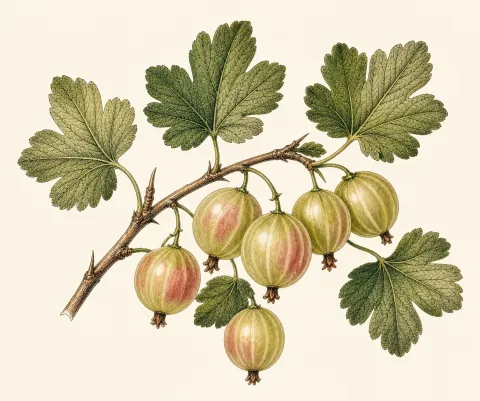
How to Grow Gooseberry
Bush Berry
Gooseberries are thorny shrubs that bear round berries ranging from green to red or purple, depending on variety. Their fruit can be used fresh when fully ripe or cooked when still tart. Well-managed plants are long-lived and productive in cool to moderate climates.
Planting
Plant gooseberries in well-drained, fertile soil in early spring or fall. Select a site with full sun in cooler regions and some afternoon shade where summers are warmer. Give plants enough spacing for air circulation and access around thorny branches. Water deeply after planting and mulch to conserve moisture and suppress weeds.
Care
Keep soil consistently moist but not waterlogged during the growing season. Prune annually to remove old, weak, or crossing branches and to open the center of the plant. Wear gloves when pruning or harvesting because many varieties have sharp thorns. Refresh mulch as needed and avoid letting weeds compete heavily at the base.
Harvest
Harvest when berries are fully sized and have developed their mature color and flavor. Some gardeners pick part of the crop early for cooking and leave the rest to sweeten on the bush. Handle fruit carefully because ripe berries can split if squeezed or dropped.
Common problems
Powdery mildew is one of the most common gooseberry diseases, especially in humid weather. Sawfly larvae, aphids, and cane injury can also reduce plant vigor. Good spacing, regular pruning, sanitation, and hand removal of pests help prevent many problems.
Popular Gooseberry varieties to grow
Select gooseberries for your climate and disease pressure, especially resistance to powdery mildew. Most are self-fertile, though another cultivar nearby can improve yields, and they usually ripen from early to midsummer.
| Variety | Type | Season | Notes | Best for |
|---|---|---|---|---|
| Hinnonmaki Red | red-fruited, hardy | mid summer | A Finnish cultivar with sweet-tart red berries and good cold hardiness. It is widely grown for fresh eating as well as desserts and preserves. | cold climates, fresh eating |
| Invicta | green-fruited, mildew resistant | mid summer | A vigorous English-type gooseberry with pale green fruit and strong resistance to powdery mildew. The berries are useful for cooking and can be picked less ripe for tart recipes. | baking, disease-prone areas |
| Captivator | red-fruited, nearly thornless | mid to late summer | A Canadian cultivar valued for relatively few thorns and reddish berries. It combines useful disease resistance with fruit suitable for fresh use or processing. | easy picking, preserves |
| Pixwell | green to pink fruit, hardy | mid summer | An old American cultivar with berries that turn pinkish as they mature. It is hardy and productive, though its flavor is often best when fully ripe. | cold climates, pies |
| Poorman | red-fruited, vigorous | mid summer | A classic American gooseberry with large dark red berries and a rich tart-sweet flavor. It is productive and particularly useful for culinary harvests. | jams, baking |
| Oregon Champion | green-fruited, American type | mid summer | A long-grown American gooseberry with large green fruit. It is commonly used for pies, preserves, and other cooked preparations. | baking, canning |
Variety notes are general guidance for US home gardens; chill hours, hardiness, and pollination needs vary, so confirm suitability for your zone and check with a local nursery. Availability differs by supplier.
Storing Gooseberry
Store gooseberries at 32 to 36°F with 90 to 95% relative humidity, where firm berries usually keep 1 to 2 weeks. They do not ripen substantially after picking, so harvest them at the maturity needed for fresh eating or cooking. Freeze dry, stemmed berries in a single layer for 8 to 12 months of best quality; for jams, preserves, or canned products, use tested USDA or NCHFP recipes because of food safety.
Using Gooseberry
Ripe gooseberries are juicy and firm, with a bright tartness that ranges from lemony to sweet-tangy depending on the variety and ripeness. They are excellent fresh when fully ripe and sweetened as needed in pies, crumbles, jam, chutney, sauce, and compote. Their small seeds and skins are edible. Harvest fully ripe fruit for fresh eating, as green gooseberries are much more sour and are usually best cooked.
General guidance for US home gardens. Variety and hardiness vary by region; check with your local Cooperative Extension office. Page updated Sep 18, 2026.