
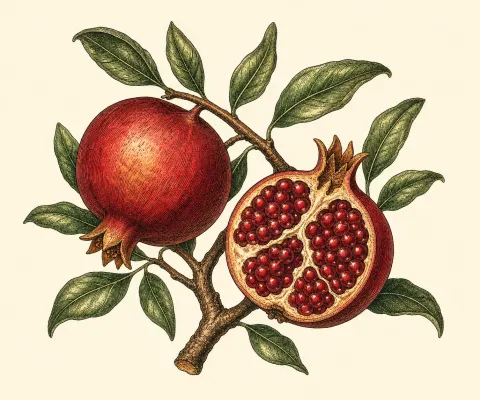
How to Grow Pomegranate Trees
Fruit Tree
The pomegranate (Punica granatum) is a long-lived deciduous shrub or small tree that produces leathery-skinned red fruit filled with juicy, seed-bearing arils. US home growers value it for its drought tolerance, ornamental orange-red spring flowers, and dependable fall crop in hot, dry regions. It stays compact enough for a backyard corner and can even be grown in a large container.
Planting
Plant bare-root trees while they are dormant in late winter or early spring, or set out container-grown plants in spring after the last hard frost. Choose the sunniest, warmest spot you have, since pomegranates need full sun, at least six to eight hours a day, to flower and fruit well. They tolerate a wide range of soils but do best in well-drained ground, so avoid low spots where water sits. Space plants about 12 to 18 feet apart if you want tree form, or closer if you plan to grow them as a hedge, and buy named varieties suited to your region rather than unnamed seedlings.
Pollination
Most pomegranate varieties are self-fertile, so a single plant can set fruit on its own. Planting a second tree nearby can still improve fruit set and overall yield through cross-pollination, and bees moving between flowers help the process. If your tree flowers heavily but drops most of its fruit early on, this is common on young plants and usually improves as they mature.
Care & pruning
Water young trees regularly to establish a deep root system, then keep the soil evenly moist during flowering and fruit development, since uneven watering can cause fruit to split. Established plants are quite drought tolerant but produce better fruit with consistent summer irrigation. Feed lightly in late winter or early spring using a balanced approach and refresh a few inches of organic mulch around the base each year, keeping it pulled back from the trunk. Prune in the dormant season to remove suckers, dead or crossing branches, and to train the plant to a few main stems, which keeps it open to sunlight and easier to harvest.
Years to bear
Pomegranates usually begin bearing fruit two to three years after planting. Yields increase steadily as the plant matures, with full production typically reached around five years.
Harvest
Fruit ripens in fall, generally from September through November depending on variety and climate, and does not continue to ripen once picked. Harvest when the fruit has developed full color, feels heavy, and gives a metallic sound when tapped, cutting or clipping it from the branch rather than pulling to avoid damaging the stem. Whole pomegranates store for several weeks in a cool spot and for a month or more in the refrigerator, and the fresh arils can be refrigerated for a few days or frozen for longer keeping.
Common problems
Common issues include fruit splitting from irregular watering, fruit drop on young plants, and occasional pests such as aphids, whiteflies, and fruit-boring insects, along with fungal fruit rots in humid areas. Prevention starts with full sun, good air circulation, steady watering, and prompt removal of fallen or damaged fruit to reduce overwintering pests and disease. For a diagnosis specific to your area and current recommendations, contact your local Cooperative Extension office.
Popular Pomegranate varieties to grow
Choose a pomegranate suited to your winter lows and summer heat. Most are self-fruitful, but fruit quality and ripening time vary widely, and colder areas should favor the hardiest selections or use containers.
| Variety | Type | Season | Notes | Best for |
|---|---|---|---|---|
| Wonderful | red, self-fruitful | late season, fall | The classic commercial pomegranate, with large deep-red fruit, tart-sweet juice, and firm arils. It needs a long, warm season for best color and flavor. | juice, fresh eating, warm climates |
| Eversweet | soft-seeded, self-fruitful | early fall | Produces pale pink to red fruit with notably soft, edible seeds and mild sweet flavor. It is a popular choice for eating out of hand. | fresh eating |
| Parfianka | soft-seeded, self-fruitful | early to mid-fall | Large red fruit has bright sweet-tart flavor and relatively soft seeds. It is valued for high-quality fresh arils and juice. | fresh eating, juice |
| Angel Red | soft-seeded, self-fruitful | early fall | A productive selection with bright red juice and soft, edible seeds. The fruit is sweet with balancing acidity. | fresh eating, juice |
| Ambrosia | large-fruited, self-fruitful | fall | Produces very large pink-red fruit with pale, sweet arils. It is best where summers are long enough to finish the crop well. | fresh eating, warm climates |
| Granada | early-ripening, self-fruitful | late summer to early fall | An earlier alternative to Wonderful, with red skin, juicy arils, and sweet-tart flavor. Useful where fall weather arrives early. | shorter growing seasons, juice |
Variety notes are general guidance for US home gardens; chill hours, hardiness, and pollination needs vary, so confirm suitability for your zone and check with a local nursery. Availability differs by supplier.
Storing Pomegranate
Keep whole pomegranates at 32 to 41 F and about 85 to 90 percent relative humidity. Sound fruit generally keeps 1 to 3 months refrigerated, with the longest storage from fruit harvested mature and uninjured. Pomegranates do not ripen further after harvest, so pick only fruit that is fully developed and well colored. Freeze arils in a single layer before packing, and use tested USDA or NCHFP recipes for juice, jelly, or other preserves.
Using Pomegranate
Pomegranate arils are crisp, juicy, sweet-tart bursts around edible seeds. Scatter them over salads and desserts, press them for juice, or cook them into sauces, syrups, and jellies. Eat the arils rather than the tough peel and bitter white pith, and take care when cutting the hard fruit.
General guidance for US home growers. Variety and pollination needs vary by region; confirm with your local Cooperative Extension office. Page updated Sep 18, 2026.