
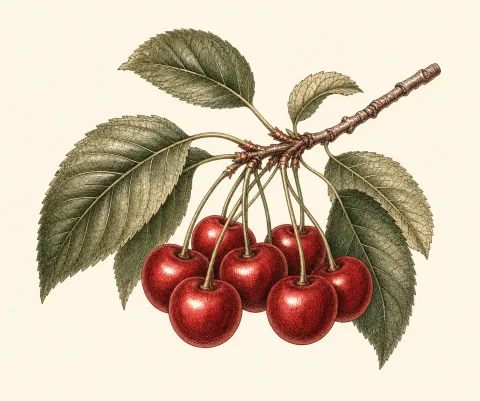
How to Grow Cherry Trees
Fruit Tree
Cherries come in two main types: sweet cherries (Prunus avium), which are eaten fresh, and tart or sour cherries (Prunus cerasus), which are prized for pies, jams, and juice. Home growers plant them for the heavy spring bloom, the early-summer harvest, and fruit that is expensive to buy fresh. Tart cherries in particular are popular because they are hardier, more self-reliant, and easier to grow in a backyard than sweet types.
Planting
Plant cherries during the dormant season, in late winter or early spring once the soil can be worked, or in fall in mild-winter regions. Choose a full-sun site with at least six to eight hours of direct light and deep, well-drained soil, since cherries will not tolerate wet or heavy ground. Space standard trees about 20 to 30 feet apart and dwarf or semi-dwarf trees roughly 10 to 15 feet apart, and plant on a slight rise or slope where cold air and water can drain away. Buy grafted trees on a named rootstock, either bare-root while dormant or container-grown during the growing season, and set the graft union a couple of inches above the soil line.
Pollination
Most tart cherries are self-fertile, so a single tree will set a full crop on its own. Many sweet cherries are self-unfruitful and need a second, compatible sweet variety that blooms at the same time nearby for cross-pollination, though a few self-fertile sweet types are available. If space is tight, look for a self-fertile variety or plant two compatible trees within about 50 to 100 feet of each other.
Care & pruning
Water young trees deeply and regularly through their first two or three years, aiming for steady moisture rather than soggy soil, and water established trees during dry spells while fruit is sizing. Feed lightly in early spring based on a soil test and the tree's growth, and avoid heavy feeding, which pushes soft growth and few flowers. Spread a few inches of organic mulch out to the drip line to hold moisture and suppress weeds, but keep it several inches back from the trunk. Prune while dormant in late winter to build a strong open framework, train sweet cherries to a central leader and tart cherries to an open center, and remove dead, crossing, or crowded wood to let light and air reach the fruit.
Years to bear
Cherry trees usually begin bearing about three to five years after planting, with dwarf and semi-dwarf trees often fruiting a little sooner than standard-size trees. Full production typically comes a few years after the first crop.
Harvest
Cherries ripen in late spring to midsummer and, unlike some fruits, do not sweeten after picking, so let them reach full color and flavor on the tree before harvesting. Pick sweet cherries with the stems attached to help them keep, and pull tart cherries gently since they bruise easily and are often harvested without stems for cooking. Use fresh cherries within a few days, refrigerate them unwashed to extend their life, or freeze, dry, or can the surplus.
Common problems
Common problems include brown rot and leaf spot in wet weather, plus birds, cherry fruit flies, aphids, and borers, and cracked fruit after rain near harvest. Reduce trouble by planting in a sunny, airy spot, cleaning up fallen fruit and leaves, pruning for good air flow, and using netting to protect ripening fruit from birds. For an accurate local diagnosis and a management plan suited to your area, contact your county Cooperative Extension office.
Popular Cherry varieties to grow
Choose sweet cherries for mild, dry-spring climates and a compatible pollinizer unless the cultivar is self-fertile. Tart cherries are generally more cold-hardy and self-fruitful, making them easier choices for many home gardens.
| Variety | Type | Season | Notes | Best for |
|---|---|---|---|---|
| Bing | sweet, needs pollinizer | early to mid summer | A classic large, dark red sweet cherry with firm flesh and rich flavor. It needs a compatible sweet-cherry pollinizer and is best where spring disease pressure is manageable. | fresh eating |
| Rainier | sweet, needs pollinizer | mid summer | A premium yellow cherry blushed with red, prized for exceptionally sweet, delicate flavor. It requires a compatible pollinizer and benefits from bird protection. | fresh eating |
| Stella | sweet, self-fertile | mid summer | One of the best-known self-fertile sweet cherries, producing large, dark fruit with good flavor. It can also pollinate many other sweet cherry cultivars. | small home orchards and fresh eating |
| Lapins | sweet, self-fertile | late summer | A productive self-fertile sweet cherry with large, firm, dark red fruit. It extends the sweet-cherry season after earlier varieties. | fresh eating and extended harvest |
| Montmorency | tart, self-fruitful, cold-hardy | early to mid summer | The standard American sour cherry, with bright red, tangy fruit and reliable production in colder regions. It is widely used for pies, juice, and preserves. | baking, canning, and cold climates |
| North Star | tart, self-fruitful, dwarf | early to mid summer | A compact, cold-hardy sour cherry tree with bright red tart fruit. Its smaller size makes netting and harvest easier in home gardens. | small spaces, baking, and cold climates |
Variety notes are general guidance for US home gardens; chill hours, hardiness, and pollination needs vary, so confirm suitability for your zone and check with a local nursery. Availability differs by supplier.
Storing Cherry
Store cherries unwashed at 30 to 32°F and 90 to 95 percent relative humidity, loosely covered or in a perforated bag. They keep best for 3 to 7 days, though very fresh, carefully handled cherries may last about 10 days. Cherries do not ripen after harvest, so pick them fully colored and sweet or fully mature for the variety. Freeze pitted cherries on a tray before packing, dry them, or use tested USDA or NCHFP recipes for preserves or canning.
Using Cherry
Ripe cherries are juicy and tender, with flavors ranging from bright tart to deep, candy-like sweetness. Sweet cherries shine in fresh eating and baking, while tart cherries are especially good for pies, jams, sauces, juice, and drying. Remove and discard pits, and do not chew them, because the kernels contain cyanide-forming compounds.
General guidance for US home growers. Variety and pollination needs vary by region; confirm with your local Cooperative Extension office. Page updated Sep 18, 2026.