
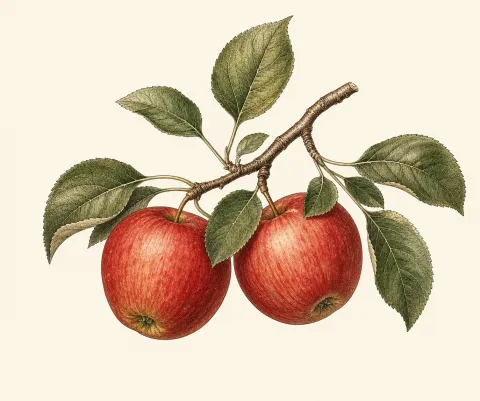
How to Grow Apple Trees
Fruit Tree
Apples are one of the most popular fruit trees for American home orchards because they are widely adapted, long-lived, and store well after harvest. Home growers plant them for fresh eating, cooking, cider, and the satisfaction of picking tree-ripe fruit that is hard to find in stores. With a good variety choice and steady care, a single tree can produce for decades.
Planting
Plant apples during the dormant season, in late fall or early spring while the tree is leafless. Choose a site with full sun, at least six to eight hours a day, and well-drained soil with a slightly acidic to neutral pH. Space standard trees about 25 to 30 feet apart, semi-dwarf trees 12 to 18 feet, and dwarf trees 6 to 10 feet, depending on the rootstock. Buy grafted bare-root trees for dormant-season planting or potted trees for planting through the growing season, and set the tree so the graft union stays a few inches above the soil line.
Pollination
Most apple varieties are not reliably self-fertile and produce a much better crop when a second, different variety blooms nearby at the same time. Plant at least two compatible varieties within about 50 feet of each other, or make sure a flowering crabapple is close by. A few varieties are considered partly self-fruitful but still yield more with a pollination partner.
Care & pruning
Water young trees deeply and regularly during their first two or three years so the root system establishes, aiming for consistent moisture rather than frequent shallow watering. Feed based on a soil test and the tree's yearly growth, and keep feeding modest so you encourage fruiting wood rather than only leafy growth. Spread a few inches of organic mulch in a ring around the tree, kept back from the trunk, to hold moisture and limit weeds. Prune in late winter while dormant to build a strong open framework, remove dead or crossing wood, and let light and air reach the center of the canopy.
Years to bear
Dwarf and semi-dwarf apple trees usually begin bearing fruit in about 2 to 4 years, while standard-size trees often take 4 to 8 years to come into good production.
Harvest
Apples are ready to pick in late summer through fall depending on the variety, when the fruit reaches full color, comes off the spur with a gentle upward twist, and tastes sweet rather than starchy. Harvest by hand and handle the fruit carefully, since bruised apples spoil quickly. Store sound, unblemished fruit in a cool, humid place such as a refrigerator or a cold cellar, where many varieties keep for weeks to several months.
Common problems
Common apple problems include coddling moth and apple maggot among insects, and scab, cedar-apple rust, and fire blight among diseases. Reduce trouble by choosing disease-resistant varieties, spacing and pruning for good air flow, and raking up and removing fallen leaves and dropped fruit that harbor pests and disease over winter. For an accurate diagnosis and management steps suited to your area, contact your local Cooperative Extension office.
Popular Apple varieties to grow
Select apples for your USDA hardiness zone, local disease pressure, and intended use, since flavor and storage quality vary widely. Most apples crop best with a different, overlapping-blooming apple or crabapple nearby for pollination.
| Variety | Type | Season | Notes | Best for |
|---|---|---|---|---|
| Honeycrisp | cold-hardy, crisp | early fall | Exceptionally crisp, juicy apples with a balanced sweet-tart flavor. The tree is notably cold-hardy, though it benefits from attentive thinning and care. | fresh eating and cold climates |
| Gala | sweet, early season | late summer to early fall | A reliable, widely grown dessert apple with aromatic sweetness and crisp flesh. Fruit colors well in sunny sites and is best enjoyed fresh. | fresh eating |
| Fuji | sweet, late season | late fall | Very sweet, firm, juicy fruit with excellent keeping quality. It needs a long enough growing season to develop its best flavor and color. | fresh eating and storage |
| Granny Smith | green, tart, late season | late fall | Firm green apples with a distinctly tart flavor and long storage life. The fruit holds its shape well when cooked. | baking and storage |
| Liberty | disease-resistant | early fall | A crisp, mildly tart apple bred with resistance to apple scab and useful resistance to several other common apple diseases. It is a practical choice for lower-spray gardens. | disease-prone areas and fresh eating |
| GoldRush | disease-resistant, late season | late fall | A tangy, richly flavored yellow apple with strong storage potential. It is resistant to apple scab and develops fuller flavor after storage. | storage and baking |
Variety notes are general guidance for US home gardens; chill hours, hardiness, and pollination needs vary, so confirm suitability for your zone and check with a local nursery. Availability differs by supplier.
Storing Apple
Store apples at 30 to 32°F and 90 to 95 percent relative humidity, preferably in a perforated bag in the refrigerator crisper. Most homegrown apples stay fresh about 1 to 3 months, although firm late-season varieties can last longer and early varieties may last only weeks. Apples produce ethylene and do not meaningfully ripen after picking, so harvest at eating maturity and keep them away from ethylene-sensitive produce. Freeze peeled slices with sugar or syrup, dehydrate them, or use tested USDA or NCHFP recipes for applesauce, juice, or home canning.
Using Apple
Ripe apples range from crisp and juicy to tender and aromatic, with flavors from tart to honey-sweet. They are good fresh, baked into pies and crisps, cooked into sauce or butter, pressed for juice or cider, and dried into rings. The fruit is safe to eat, but avoid chewing or eating large quantities of seeds, which contain cyanide-forming compounds.
General guidance for US home growers. Variety and pollination needs vary by region; confirm with your local Cooperative Extension office. Page updated Sep 18, 2026.