
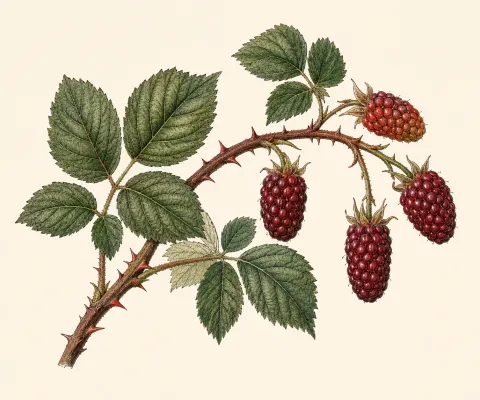
How to Grow Loganberry
Bramble
Loganberry is a trailing bramble related to blackberry and raspberry, known for elongated dark red fruit with a tart, aromatic flavor. It is vigorous and benefits from a support system to separate old and new canes. Gardeners usually grow it where the climate is mild enough to protect overwintering canes.
Planting
Plant loganberry in full sun and well-drained soil with good organic matter. Install wires or a trellis at planting time to manage the long canes. Space plants generously so air can move through the row and harvest is easier. Water after planting and apply mulch to reduce weed pressure and moisture loss.
Care
Water regularly during dry periods, especially while new canes are growing and fruit is sizing. Remove spent floricanes after harvest and train the current season's canes for next year's crop. Thin excess canes to prevent congestion and improve light distribution. Inspect ties and supports each year so canes are not damaged by rubbing or crowding.
Harvest
Fruit is ready when it develops full color and separates easily with a gentle pull. Because the berries are soft, frequent harvest and careful handling are important. Harvesting in the cool part of the day can help preserve quality.
Common problems
Botrytis, cane blights, and mite problems can develop in humid, crowded plantings. Winter cane injury may also reduce production. Good trellising, cane thinning, sanitation, and selection of a protected sunny site lower these risks.
Popular Loganberry varieties to grow
Loganberries are vigorous, trailing cane fruits that need a trellis and are best suited to mild-winter regions, although hardiness varies by selection. Named choices are limited, so buy from a specialist nursery and plan for a summer harvest.
| Variety | Type | Season | Notes | Best for |
|---|---|---|---|---|
| Logan | thorny, trailing | mid to late summer | The original loganberry, a blackberry-raspberry hybrid with long, dark red berries and a tart, wine-like flavor. It is especially valued for cooked uses. | jams, pies, juice |
| Thornless Logan | thornless, trailing | mid to late summer | A nearly spineless form of Logan that makes training and picking easier than the traditional thorny type. Fruit retains the characteristic tangy loganberry flavor. | home gardens, preserves |
| Lincoln Logan | thornless, cold-tolerant | mid to late summer | A tissue-culture-derived thornless Logan selection that can regenerate thornless canes from the roots after winter injury. It is useful where occasional cold damage is a concern. | colder gardens, trellises |
| Ly 654 | thornless, trailing | mid summer | A recognized thornless loganberry cultivar with large, dark red fruit. Its vigorous canes benefit from regular tying and pruning. | fresh eating, jams |
Variety notes are general guidance for US home gardens; chill hours, hardiness, and pollination needs vary, so confirm suitability for your zone and check with a local nursery. Availability differs by supplier.
Storing Loganberry
Store ripe loganberries at 32 to 36°F with 90 to 95% relative humidity, and use them within 2 to 3 days. Loganberries do not ripen after harvest, so pick fully colored fruit and refrigerate it immediately without washing until use. Freeze dry berries in one layer before packing for 8 to 12 months of best quality; for jams, syrups, or canned products, use tested USDA or NCHFP recipes because of food safety.
Using Loganberry
Ripe loganberries are very juicy and soft, with a bold sweet-tart flavor between raspberry and blackberry. They are excellent fresh, but their delicate texture makes them especially useful for jam, pie, cobbler, syrup, sauce, juice, and freezing. The berry's small seeds are edible. Pick fully colored berries that release easily, then refrigerate promptly and discard any moldy fruit.
General guidance for US home gardens. Variety and hardiness vary by region; check with your local Cooperative Extension office. Page updated Sep 18, 2026.