
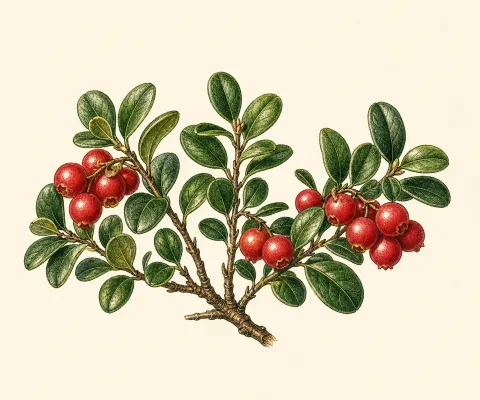
How to Grow Lingonberry
Ground Cover
Lingonberry is a low evergreen plant that forms a neat ground cover and bears small red berries. It is best suited to cool climates and acidic soils, much like other heath family plants. In the right site, it serves as both an edible planting and an ornamental edging.
Planting
Plant lingonberry in acidic, well-drained soil rich in organic matter. Choose full sun in cool areas or light afternoon shade where summers are warmer. Space plants so they can spread and knit together without becoming overly congested. Water thoroughly after planting and maintain an organic mulch that supports even moisture.
Care
Keep the root zone consistently moist but not soggy, since the shallow roots dry out quickly. Remove weeds by hand to avoid disturbing the surface roots. Prune lightly only as needed to remove winter injury or thin older patches. Monitor soil conditions because poor vigor often reflects pH or drainage problems.
Harvest
Berries are harvested when fully red and firm, usually in late summer and sometimes with a lighter second crop where conditions allow. Hand picking is typical because the plants are low and compact. Flavor often improves after full ripening on the plant.
Common problems
Root stress from heat, drought, or poorly matched soil is more common than serious insect damage. Leaf spots and fruit rots may occur if plants stay crowded and damp. Acidic soil, mulch, steady moisture, and good spacing help prevent most issues.
Popular Lingonberry varieties to grow
Lingonberries require acidic, organic, consistently moist but well-drained soil, much like blueberries. Choose hardy cultivars for cool climates; several selections can produce a summer crop and a smaller fall crop.
| Variety | Type | Season | Notes | Best for |
|---|---|---|---|---|
| Koralle | red-fruited, compact | summer and fall | A classic European cultivar with glossy red berries and a compact, low-growing habit. It is one of the most widely available lingonberries for home gardeners. | containers, preserves |
| Red Pearl | large-fruited, red | summer and fall | A productive cultivar with relatively large, bright red berries. Its tart fruit is particularly useful for sauces, jams, and traditional cooked dishes. | sauces, jam |
| Erntesegen | large-fruited, red | summer and fall | A German selection known for large red berries and reliable production under suitable acidic soil conditions. It is a good choice for gardeners prioritizing fruit size. | preserves, specialty fruit |
| Sanna | Swedish cultivar, red | late summer to fall | A Swedish lingonberry cultivar with good berry size and productive growth. It is adapted to cool conditions and needs acidic soil to perform well. | cold climates, jam |
| Regal | North American selection, red | late summer to fall | A named lingonberry selection grown for ornamental groundcover value as well as tart red fruit. It works well in acidic beds alongside other ericaceous plants. | edible landscaping, containers |
| Splendor | red-fruited, productive | summer and fall | A productive lingonberry cultivar with bright red berries and a low spreading habit. It is useful where a fruiting evergreen groundcover is desired. | groundcover, preserves |
Variety notes are general guidance for US home gardens; chill hours, hardiness, and pollination needs vary, so confirm suitability for your zone and check with a local nursery. Availability differs by supplier.
Storing Lingonberry
Store firm, ripe lingonberries at 32 to 36°F with 90 to 95% relative humidity, where they can keep about 2 to 4 weeks. Lingonberries do not ripen after picking, so harvest only fully red fruit. Freeze dry berries for 8 to 12 months of best quality, or preserve them as a refrigerated or frozen sauce; for any home-canned lingonberry product, use tested USDA or NCHFP recipes because of food safety.
Using Lingonberry
Ripe lingonberries are firm, juicy, and sharply tart, with a cranberry-like flavor and a faint bitterness. They are best sweetened and cooked into preserves, sauce, syrup, juice, baked goods, and relishes, although fully ripe berries can be eaten fresh. The berries, skins, and small seeds are edible. Use only ripe red berries, since underripe fruit is especially astringent and bitter.
General guidance for US home gardens. Variety and hardiness vary by region; check with your local Cooperative Extension office. Page updated Sep 18, 2026.