
How to Grow Honeyberry (Haskap)
Bush Berry
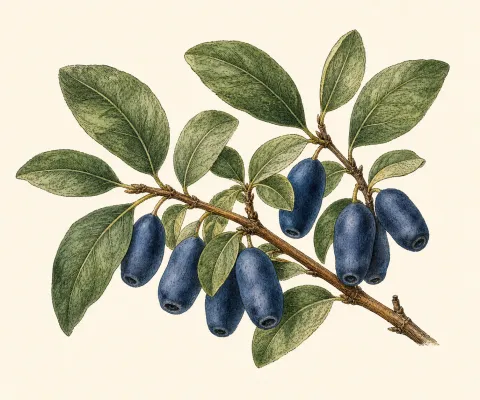
Honeyberries are very early fruiting shrubs related to honeysuckle, with elongated blue berries that ripen before many other small fruits. They are valued for cold hardiness and early bloom, though fruiting can be uneven without good pollination. Most varieties need a second compatible variety nearby.
Planting
Plant honeyberries in full sun to light shade in well-drained soil with moderate moisture. Space plants so mature branches have room and pollinating varieties can be placed near one another. Set plants at the same depth they were growing in the container and water well after planting. Mulch to reduce weeds and protect the shallow root zone.
Care
Water during dry weather, especially while plants are young and when fruit is developing. Prune lightly in the first few years, then remove a few older branches as shrubs mature to keep them productive. Avoid heavy pruning that reduces next season's crop. Maintain mulch and keep grass and weeds from crowding the base.
Harvest
Berries are ready when they develop full blue color and taste sweet enough for the variety. Fruit often ripens over a short period and can drop when overripe, so check plants frequently. Gentle hand picking is common in home gardens.
Common problems
Birds often find the fruit quickly, and uneven pollination can reduce yields if the wrong varieties are paired. Root stress from drought or poor drainage can also weaken plants. Use netting when needed, match compatible pollinizers, and keep soil moisture steady.
Popular Honeyberry (Haskap) varieties to grow
Honeyberries are exceptionally cold-hardy and need at least two compatible cultivars that bloom together for pollination. Choose varieties with overlapping bloom times, then stagger ripening selections from late spring into early summer.
| Variety | Type | Season | Notes | Best for |
|---|---|---|---|---|
| Aurora | large-fruited, needs pollinizer | early summer | A University of Saskatchewan cultivar with large, elongated blue berries and a sweet-tart flavor. It is often paired with Honey Bee for pollination. | fresh eating, freezing |
| Borealis | cold-hardy, needs pollinizer | early summer | A hardy haskap with large, firm fruit and a balanced sweet-tart flavor. It is well suited to cold-winter regions. | cold climates, fresh eating |
| Tundra | firm-fruited, needs pollinizer | early summer | A University of Saskatchewan selection with firm berries that hold up well after picking. Its flavor works especially well in baking and preserves. | freezing, baking |
| Indigo Gem | productive, needs pollinizer | late spring to early summer | A productive cultivar with oval blue fruit and a pleasant tart-sweet flavor. It is commonly used with other Indigo series cultivars or Honey Bee as a pollination partner. | jams, home gardens |
| Honey Bee | pollinizer, productive | early summer | A vigorous cultivar widely used as a pollinizer for Aurora and other haskaps. It also produces usable, tangy fruit of its own. | pollination partner, preserves |
| Cinderella | very cold-hardy, needs pollinizer | late spring to early summer | A Russian-origin cultivar with aromatic blue berries and strong cold tolerance. Its compact habit can suit smaller berry plantings. | cold climates, small gardens |
Variety notes are general guidance for US home gardens; chill hours, hardiness, and pollination needs vary, so confirm suitability for your zone and check with a local nursery. Availability differs by supplier.
Storing Honeyberry (Haskap)
Store ripe honeyberries at 32 to 36°F with 90 to 95% relative humidity, and use them within about 5 to 7 days. Haskap berries do not ripen well after harvest, so pick only fully blue, flavorful fruit and cool it quickly. Freeze dry berries individually before packing for 8 to 12 months of best quality; for jams or other home-canned products, use tested USDA or NCHFP recipes because of food safety.
Using Honeyberry (Haskap)
Ripe honeyberries taste like a tangy mix of blueberry, blackberry, and strawberry, with tender skin and a soft, juicy interior. Eat them fresh when fully ripe, or use them in pies, muffins, jam, sauce, smoothies, ice cream, and frozen desserts. Do not judge ripeness by blue skin alone, because berries can turn blue before their interior is ripe. Wait until the fruit is soft and evenly colored inside, then taste a berry before picking the crop.
General guidance for US home gardens. Variety and hardiness vary by region; check with your local Cooperative Extension office. Page updated Sep 18, 2026.