
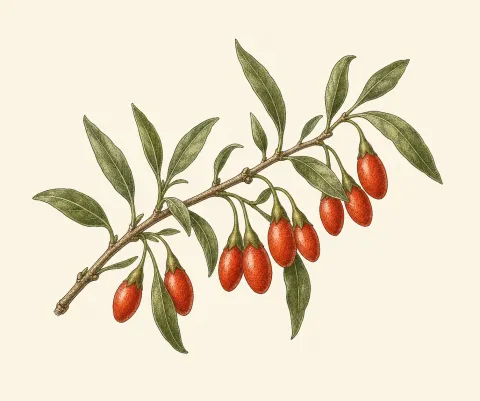
How to Grow Goji Berry
Vine
Goji berry is a woody, arching plant often trained to a trellis or support to keep fruit clean and growth manageable. It bears small red berries over a long season once established. Home gardeners often grow it as both an edible and ornamental plant.
Planting
Plant goji in a sunny site with well-drained soil and room for a support if you plan to train it upright. Avoid heavy, poorly drained ground that stays wet in winter. Space plants to allow airflow because the stems can become dense and sprawling. Water thoroughly after planting and tie young shoots loosely if training to a trellis.
Care
Water regularly while the plant establishes, then avoid keeping the soil constantly saturated. Prune each year to control size, remove weak or tangled growth, and improve light through the canopy. Training a few main stems can make harvest and maintenance easier. Mulch around the root area, but keep mulch away from the crown.
Harvest
Berries are picked when they turn fully red and release easily from the stem. Fruit may ripen over several weeks, so repeated harvests are common. Handle ripe berries gently because they can bruise or split.
Common problems
Spider mites, aphids, and powdery mildew can appear, especially where plants are dry-stressed or overcrowded. Fruit cracking may also occur with uneven moisture. Steady watering, pruning for airflow, and prompt removal of damaged growth help reduce trouble.
Popular Goji Berry varieties to grow
Goji berries need full sun, well-drained soil, and a warm enough season to ripen their long-bearing crop. Named varieties are comparatively limited in US retail trade, so buy from a reputable nursery and allow plants time to establish.
| Variety | Type | Season | Notes | Best for |
|---|---|---|---|---|
| Crimson Star | red-fruited goji | late summer to fall | A named Lycium barbarum selection grown for elongated red berries and ornamental purple flowers. It is usually trained or pruned to keep its arching growth manageable. | fresh or dried berries, trellises |
| Phoenix Tears | orange-red fruited goji | late summer to fall | A distinct named goji selection with orange-red fruit rather than the usual deep red. It is grown by collectors as well as gardeners seeking a different fruit color. | specialty gardens, fresh fruit |
| Big Lifeberry | large-fruited goji | late summer to fall | A commercially marketed large-fruited goji cultivar with red berries. Like other gojis, it benefits from sun, drainage, and annual pruning. | home harvests, drying |
| Sweet Lifeberry | red-fruited goji | late summer to fall | A named selection sold for fruit intended to be milder and more palatable than many seed-grown gojis. Fruit is borne over an extended late-season period. | fresh eating, drying |
Variety notes are general guidance for US home gardens; chill hours, hardiness, and pollination needs vary, so confirm suitability for your zone and check with a local nursery. Availability differs by supplier.
Storing Goji Berry
Store fully ripe goji berries at 32 to 36°F with 90 to 95% relative humidity, and plan to use fresh fruit within 3 to 7 days. Goji berries do not develop their best flavor after harvest, so pick them fully colored and soft-ripe, then handle gently. Freeze dry berries on a tray before packing for about 8 to 12 months, or dry them for longer pantry storage; for any home-canned goji product, use tested USDA or NCHFP recipes because of food safety.
Using Goji Berry
Ripe goji berries are mildly sweet and tangy, with a soft, tomato-like texture when fresh. They are most often dried for snacking, trail mixes, tea, granola, baking, and simmered sauces, though ripe fresh berries can also be eaten. Eat the fully colored, ripe berries, since unripe fruit is unpleasantly bitter. Use fruit only from plants correctly identified as edible goji and not from ornamental plants that may have been treated with pesticides.
General guidance for US home gardens. Variety and hardiness vary by region; check with your local Cooperative Extension office. Page updated Sep 19, 2026.