
How to Grow Elderberry
Bush Berry
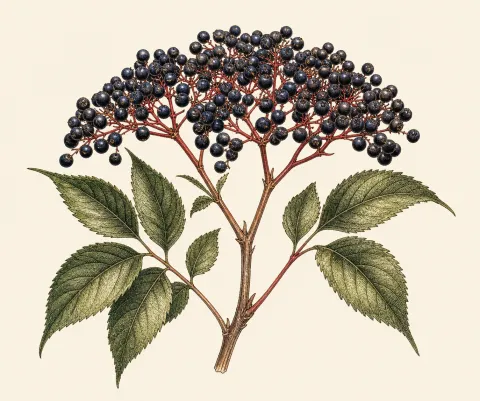
Elderberries are vigorous shrubs grown for broad clusters of small dark berries and showy spring flowers. They are often used as a screen or informal hedge as well as a fruiting plant. Most cultivated elderberries need another compatible variety nearby for better fruit set.
Planting
Plant elderberries in full sun for best fruiting, though they tolerate light shade. Use a site with moist, well-drained soil and enough room because plants can spread by suckers. Set more than one variety if cross-pollination is needed for the selection you are growing. Water deeply after planting and mulch the root zone to limit weed competition.
Care
Keep plants evenly watered during establishment and during dry periods. Prune in late winter by removing dead wood and thinning out some older canes to encourage strong new growth. Allow enough spacing and sunlight to keep the interior from becoming dense and shaded. Remove unwanted suckers if you want to keep plants within a defined row or bed.
Harvest
Fruit is harvested when whole clusters turn fully dark and berries are plump. Cut entire clusters rather than stripping individual berries in the garden. Process or refrigerate the fruit promptly because ripe berries are delicate.
Common problems
Cane borers, aphids, and birds can be troublesome, and fungal leaf diseases may appear in wet, crowded plantings. Preventive steps include pruning for airflow, removing dead canes, cleaning up fallen debris, and using netting where bird pressure is high.
Popular Elderberry varieties to grow
Choose elderberries suited to your winter chill and growing zone, and plant two compatible cultivars for heavier crops. Most ripen from late summer into early fall and are best cooked for syrups, wine, preserves, and baking.
| Variety | Type | Season | Notes | Best for |
|---|---|---|---|---|
| Adams | American elderberry, needs pollinizer | late summer | A long-established Sambucus canadensis selection with large berry clusters and dependable productivity. Pair it with York or another American elderberry for pollination. | syrups, jelly, wine |
| York | American elderberry, needs pollinizer | late summer | Known for especially large fruit clusters and relatively large berries. It is commonly planted with Adams to improve fruit set. | preserves, juice, pollination partner |
| Bob Gordon | American elderberry, needs pollinizer | late summer | A productive cultivar with clusters that often hang downward, helping reduce bird damage. Its dark berries are widely used for juice and preserves. | juice, syrup, home processing |
| Wyldewood | American elderberry, needs pollinizer | late summer | A vigorous, productive selection with large clusters of dark berries. It is a useful companion planting with Bob Gordon. | large harvests, preserves |
| Ranch | American elderberry, compact | late summer | A shorter-growing American elderberry that can fit smaller gardens better than many vigorous types. It produces clusters of dark fruit for cooking. | small gardens, preserves |
| Nova | American elderberry, needs pollinizer | late summer | A reliable, productive elderberry with large flower and fruit clusters. It is commonly grown for culinary processing rather than fresh eating. | jelly, wine, syrup |
Variety notes are general guidance for US home gardens; chill hours, hardiness, and pollination needs vary, so confirm suitability for your zone and check with a local nursery. Availability differs by supplier.
Storing Elderberry
Store ripe elderberry clusters at 32 to 36°F with 90 to 95% relative humidity, and use them within 2 to 3 days. Elderberries do not ripen after picking, so harvest only fully dark, mature berries and refrigerate them promptly. Strip, rinse, dry, and freeze berries in a single layer before packing for 8 to 12 months of best quality; for jams, syrups, or canned products, use tested USDA or NCHFP recipes because of food safety.
Using Elderberry
Ripe elderberries are tart, earthy, and juicy, with small seeds and little sweetness when raw. They are best cooked into syrup, jelly, jam, pie filling, wine, or baked goods, and can be dried for later cooked use. Do not eat raw or improperly prepared elderberries, and remove stems, leaves, and unripe berries before cooking. Dried elderberries should also be rehydrated and cooked before eating.
General guidance for US home gardens. Variety and hardiness vary by region; check with your local Cooperative Extension office. Page updated Sep 18, 2026.