
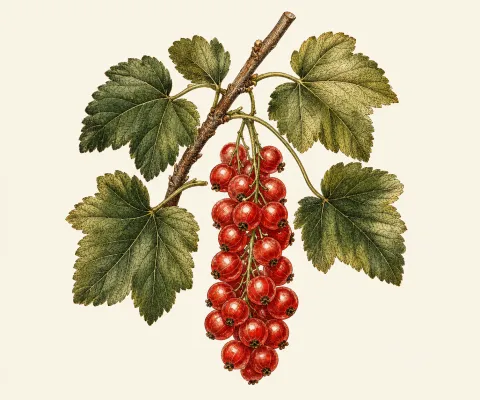
How to Grow Currant
Bush Berry
Currants are compact shrubs grown for clusters of tart to sweet berries that ripen in early to midsummer. Red, white, and black currants differ somewhat in flavor, but they are managed in similar ways in home gardens. The plants fit well in small spaces and are often productive for many years.
Planting
Plant currants in early spring or fall in well-drained soil with good organic matter. Choose a site with full sun in cool climates or morning sun and light afternoon shade in warmer areas. Space plants to allow steady air movement and room for mature growth. Set the crown at about the same depth it grew in the nursery and water thoroughly after planting.
Care
Keep the root zone evenly moist, especially during establishment and fruit fill. Renew the shrub gradually by pruning out some of the oldest canes each year and keeping a mix of younger, productive wood. Maintain mulch to limit weeds and moderate soil temperature. Remove weak, crowded, or damaged growth to improve light penetration and airflow.
Harvest
Berries are ready when they reach full color and flavor and detach easily in clusters. Harvest gently to avoid bruising and refrigerate soon after picking. Currants are commonly used fresh, cooked, or preserved.
Common problems
Powdery mildew, leaf spots, and cane dieback can develop where plants stay crowded or damp. Aphids and currant worms may also appear. Reduce problems by pruning for airflow, removing fallen debris, and checking plants regularly so early infestations can be managed by hand or by pruning out affected growth.
Popular Currant varieties to grow
Choose currants for your winter chill and summer temperatures, as they generally perform best in cool regions with good air circulation. Most are self-fruitful, but check local white pine blister-rust rules before buying black currants, since restrictions can vary by state.
| Variety | Type | Season | Notes | Best for |
|---|---|---|---|---|
| Red Lake | red currant, self-fruitful | mid-summer | A classic red currant with long clusters of bright red, tart berries. It is dependable in cool climates and excellent for cooking. | jelly, baking, cold climates |
| Rovada | red currant, self-fruitful | mid to late summer | Produces exceptionally long strings of large, bright red berries. Its tart fruit is attractive for fresh garnish and preserves. | jelly, fresh garnish |
| Jonkeer van Tets | red currant, early-ripening | early summer | An early red currant with large clusters and tangy berries. It is useful for extending the currant season ahead of later cultivars. | early harvest, preserves |
| Pink Champagne | pink currant, self-fruitful | mid-summer | A pale pink currant with a milder, sweeter flavor than many red currants. The translucent fruit is especially appealing for fresh eating. | fresh eating, desserts |
| Titania | black currant, rust-resistant | mid-summer | A vigorous black currant bred for resistance to white pine blister rust and powdery mildew. It bears large, aromatic black fruit for cooking and juice. | cold climates, juice, preserves |
| Consort | black currant, rust-resistant | mid-summer | An older black currant developed for resistance to white pine blister rust. Its fruit is strongly flavored and best suited to culinary uses. | preserves, cold climates |
Variety notes are general guidance for US home gardens; chill hours, hardiness, and pollination needs vary, so confirm suitability for your zone and check with a local nursery. Availability differs by supplier.
Storing Currant
Refrigerate currants at 31 to 32 F and 90 to 95 percent relative humidity, preferably kept on their stems until use. They generally stay fresh for about 1 to 2 weeks when promptly chilled and protected from crushing. Currants do not ripen appreciably after picking, so harvest berries only when fully colored and mature. Freeze them individually before packing, or use tested USDA or NCHFP recipes for jelly, jam, juice, or other preserves.
Using Currant
Currants are small, juicy berries with a bright sweet-tart flavor, ranging from tangy red and white types to deeper, musky black types. Use them fresh, in jams and jellies, baked goods, sauces, syrups, and dried-fruit mixtures. Wash currants before eating and discard any berries or clusters showing mold or spoilage.
General guidance for US home gardens. Variety and hardiness vary by region; check with your local Cooperative Extension office. Page updated Sep 18, 2026.