
How to Grow Cranberry
Ground Cover
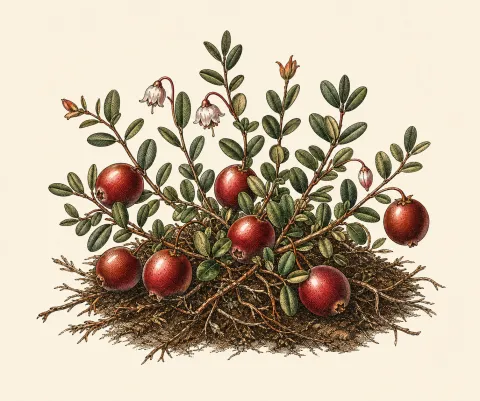
Cranberry is a trailing evergreen plant that produces small tart berries on slender runners. In home gardens it is best treated as a specialty crop for acidic, moist soils rather than a standard backyard fruit. It can be attractive in a dedicated bed where its growing conditions are carefully managed.
Planting
Plant cranberries in full sun in a bed prepared with acidic, moisture-retentive but well-aerated soil. Do not place them in ordinary garden soil unless the site already fits their pH and drainage needs. Space plants so runners can fill in over time, and keep weeds out from the start. Water thoroughly after planting and do not allow the bed to dry out completely.
Care
Maintain steady moisture because cranberries have shallow roots and suffer quickly from drought stress. Trim or thin excessive runner growth if the bed becomes too dense and fruiting declines. Keep the planting free of aggressive weeds that can overtake the low vines. Winter mulch or other cold protection may help in exposed sites with little snow cover.
Harvest
Berries are harvested when they are fully colored and firm, usually in fall. Home gardeners generally pick them by hand rather than using commercial methods. Fruit stores better when harvested dry and handled gently.
Common problems
Fruit rot, leaf blight, and poor vigor are often linked to excess moisture on foliage, overcrowding, or soil problems. Weed competition is also a major challenge in small plantings. Good bed preparation, careful watering, sanitation, and periodic thinning are the main preventive tools.
Popular Cranberry varieties to grow
Cranberries need acidic soil, consistent moisture, and a cool-winter climate, so they are a specialized home-garden crop rather than a typical raised-bed berry. Cultivars are largely self-fruitful, but choose for season, berry size, and local nursery availability.
| Variety | Type | Season | Notes | Best for |
|---|---|---|---|---|
| Early Black | heirloom, early-ripening | September | A historic Massachusetts cultivar with dark red fruit and early harvest. Its earlier maturity is useful where autumn frosts come early. | short growing seasons, sauce |
| Ben Lear | early-ripening, dark red | September | An established Wisconsin selection producing deep burgundy fruit. It is commonly grown for early color development and processing quality. | sauce, juice |
| Stevens | large-fruited, midseason | late September to October | A widely grown hybrid with large, firm, red berries and dependable productivity. It is a standard choice where a midseason crop is wanted. | fresh use, sauce, home bogs |
| Pilgrim | large-fruited, late-ripening | October | Produces large, waxy red berries and ripens later than Early Black. It suits sites with a longer fall season. | late harvest, sauce |
| Howes | heirloom, late-ripening | October | A long-established Massachusetts cultivar with firm, tart fruit and good pectin content. It is traditionally valued for processed cranberry products. | jellies, sauce, preserves |
| Mullica Queen | large-fruited, early-ripening | September | A newer named cultivar with high yields and good color. It is primarily a commercial selection but may be available through specialty cranberry sources. | specialty plantings, early harvest |
Variety notes are general guidance for US home gardens; chill hours, hardiness, and pollination needs vary, so confirm suitability for your zone and check with a local nursery. Availability differs by supplier.
Storing Cranberry
Store fresh cranberries at 32 to 40 F with high humidity in a breathable bag or covered container. Firm, dry cranberries can commonly keep 1 to 2 months in the refrigerator. Cranberries do not ripen after harvest, so harvest only fully colored berries. Freeze them whole without blanching, or use tested USDA or NCHFP recipes for sauce, juice, or preserves.
Using Cranberry
Raw cranberries are very tart, crisp, and juicy, becoming brighter and more balanced when cooked with sugar or other fruit. They are best for sauce, relish, juice blends, muffins, quick breads, chutney, and drying. Wash fresh berries and discard soft, shriveled, or moldy ones before cooking or preserving.
General guidance for US home gardens. Variety and hardiness vary by region; check with your local Cooperative Extension office. Page updated Sep 19, 2026.