
How to Grow Boysenberry
Bramble
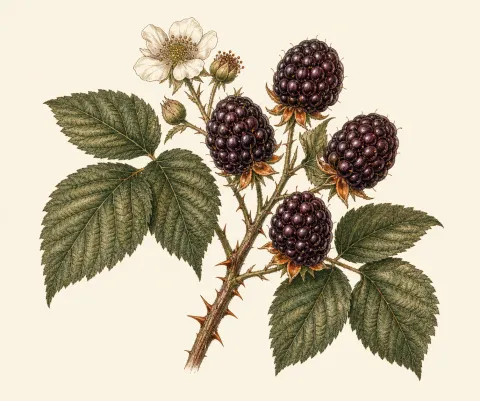
Boysenberry is a trailing bramble that produces large dark berries with a rich flavor. It grows much like blackberry and raspberry relatives, with long canes that benefit from support and annual renewal. In home gardens it needs room, sunlight, and regular pruning to stay manageable.
Planting
Plant boysenberry in full sun in fertile, well-drained soil. Set up a trellis or wire support early because trailing canes are easier to manage when trained from the start. Space plants to promote air movement and to give room for new canes each year. Water deeply after planting and mulch to reduce weeds and maintain soil moisture.
Care
Keep the soil evenly moist during cane growth and fruiting. After harvest, remove the canes that fruited and tie in the new canes that will bear next season. Thin canes if growth becomes crowded, since dense foliage encourages disease and makes picking harder. Keep the row free of weeds and avoid injuring canes during routine maintenance.
Harvest
Harvest when berries are fully colored, plump, and release easily from the plant. Ripe fruit is soft and should be handled gently and cooled promptly. Picking every few days during the season helps maintain quality.
Common problems
Cane diseases, fruit rots, and spider mites are common where plantings are crowded or drought stressed. Birds may also take ripe fruit. Trellising, renewal pruning, mulch, sanitation, and steady watering are the main non-chemical prevention practices.
Popular Boysenberry varieties to grow
Named boysenberry choices are limited compared with blackberries, and availability can be regional. Grow these trailing canes on a trellis in a mild site, as they generally fruit on second-year canes and are not ideal for severe winter cold.
| Variety | Type | Season | Notes | Best for |
|---|---|---|---|---|
| Boysen | thorny trailing cane | early to mid-summer | The original boysenberry type, producing very large, dark purple-black berries with rich raspberry-blackberry flavor. The soft fruit is best picked ripe and used promptly. | fresh eating, pies, preserves |
| Thornless Boysenberry | thornless trailing cane | early to mid-summer | A thornless form of boysenberry that makes harvesting and training easier. It retains the large, aromatic, soft fruit associated with boysenberries. | home gardens, fresh eating |
| Nectar | thornless boysenberry | mid-summer | An established thornless boysenberry cultivar with large, flavorful dark berries. Like other boysenberries, fruit is delicate and especially good when grown for home use rather than shipping. | fresh eating, jam |
| Newberry | boysenberry hybrid, thornless | mid-summer | Also marketed as Ruby Boysen, this newer boysenberry hybrid was developed for improved plant performance and marketability. Its berries retain the sweet-tart boysenberry character. | fresh eating, farm stands |
Variety notes are general guidance for US home gardens; chill hours, hardiness, and pollination needs vary, so confirm suitability for your zone and check with a local nursery. Availability differs by supplier.
Storing Boysenberry
Chill boysenberries immediately at 32 to 34 F and 90 to 95 percent relative humidity, keeping them unwashed until use. They are highly perishable and usually keep only 2 to 3 days in the refrigerator. Boysenberries do not ripen after harvest, so pick them fully colored, aromatic, and easily released from the plant. Freeze berries in a single layer before packing, or use tested USDA or NCHFP recipes for jams, syrups, or other preserves.
Using Boysenberry
Boysenberries are deeply sweet-tart, fragrant, and juicy, with a soft, seedy berry texture. They are especially good fresh, in cobblers and pies, as jam, in sauces, or frozen for smoothies. Wash them gently just before eating, refrigerate promptly, and discard berries with mold.
General guidance for US home gardens. Variety and hardiness vary by region; check with your local Cooperative Extension office. Page updated Sep 18, 2026.