
How to Grow Aronia (Chokeberry)
Bush Berry
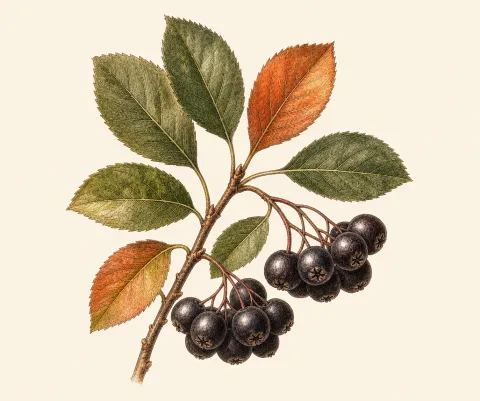
Aronia is a hardy shrub grown for glossy berries, white spring flowers, and dependable fall color. It adapts to a wide range of garden soils and can be used in edible landscapes or as an ornamental hedge. Black-fruited and red-fruited forms are both available, though black aronia is more often grown for fruit.
Planting
Plant aronia in full sun for the best fruiting and compact growth, though it will tolerate part shade. It grows in many soils, including sites that stay somewhat moist, as long as drainage is not constantly poor. Space shrubs to allow mature width and easy harvest access. Water after planting and mulch to hold moisture and reduce weeds.
Care
Provide regular water during the first growing seasons and during extended dry spells. Prune out damaged or oldest stems every few years to renew the shrub and keep it from becoming crowded. Remove suckers if a tighter plant form is desired, or allow them to fill in if you want a hedge. Keep the area around the base free of dense weed growth.
Harvest
Fruit is usually harvested in late summer to early fall after berries color fully and soften somewhat. Clusters can be clipped by hand for easier picking. Fruit often holds on the plant for a period, but quality is best when harvested at full ripeness.
Common problems
Aronia is relatively low maintenance, but leaf spots, fire blight, and occasional insect feeding can occur. Wet, crowded growth increases disease risk. Full sun, good spacing, pruning, and seasonal cleanup help keep plants healthy.
Popular Aronia (Chokeberry) varieties to grow
Aronia is exceptionally cold hardy and generally self-fruitful, making it easy to grow in many northern US gardens. Choose for plant size and fruit use, since the berries are strongly astringent fresh and usually shine in cooked or blended products.
| Variety | Type | Season | Notes | Best for |
|---|---|---|---|---|
| Viking | black aronia, self-fruitful | late summer to early fall | A widely planted selection with large black fruit borne in clusters and reliable cold hardiness. The berries are tart and astringent, improving in juice, syrup, and preserves. | juice, preserves, cold climates |
| Nero | large-fruited black aronia | late summer to early fall | A well-known European selection grown in North America for its relatively large fruit and productive clusters. It forms a vigorous, hardy shrub. | juice, jams, hedges |
| McKenzie | native aronia selection | late summer to early fall | A North American selection valued for its hardy, adaptable shrub habit and black fruit. It also provides ornamental white spring flowers and red fall foliage. | native plantings, hedges |
| Autumn Magic | compact black aronia | late summer to early fall | A compact cultivar selected for heavy fruiting and vivid red-purple fall color. Its smaller size makes harvesting easier in a mixed border. | small gardens, ornamental edible landscapes |
| Low Scape Mound | dwarf black aronia | late summer to early fall | A low, spreading aronia with white flowers, dark berries, and strong autumn color. It is more useful as an edible groundcover or border than as a high-volume fruit crop. | small spaces, edging |
Variety notes are general guidance for US home gardens; chill hours, hardiness, and pollination needs vary, so confirm suitability for your zone and check with a local nursery. Availability differs by supplier.
Storing Aronia (Chokeberry)
Refrigerate freshly picked aronia berries at 32 to 36 F with high humidity, preferably in a shallow container that protects them from crushing. They usually keep fresh for about 1 to 2 weeks when dry, clean, and promptly chilled. Aronia berries do not meaningfully ripen after harvest, so pick them only when fully dark and mature. Freeze dry berries on a tray before packaging, or use tested USDA or NCHFP recipes for juice, jelly, or other preserves.
Using Aronia (Chokeberry)
Fully ripe aronia berries are dark, tart, and strongly astringent, with a firm, juicy skin. They work best in juice blends, syrups, jams, pies, sauces, and dried fruit mixes, often combined with sweeter fruit. Use clean, fully ripe berries and discard any moldy or spoiled fruit before processing.
General guidance for US home gardens. Variety and hardiness vary by region; check with your local Cooperative Extension office. Page updated Sep 19, 2026.